

60 inch TVs are hard to find because they are not a popular size. Most people either want a smaller TV for their bedroom or a larger TV for their living room. 60 inch TVs are also more expensive than other sizes, so most people choose to buy a different size.
There are a few reasons why 60 inch TVs may be hard to find. One reason is that they are not as popular as other sizes, so there may be less demand for them. Additionally, 60 inch TVs can be more expensive to manufacture than smaller sizes, so they may not be as widely available.
Finally, 60 inch TVs require more space to display properly, so they may not be an option for everyone. If you’re looking for a 60 inch TV, it’s worth checking out a few different stores to see what’s available.
This article try to find the reasons behind the scarcity of 60-inch TVs, exploring market trends, consumer preferences, manufacturing challenges, logistics, and technological shifts. Whether you’re a tech enthusiast, a blogger crafting content, or a consumer hunting for the ideal TV, this guide provides a detail explanation to help you understand this trend.
Market Standardization and Consumer Preference
TV manufacturers prioritize mass production to lower costs, and this is easier when they focus on a few popular sizes. Over the past decade, 55-inch and 65-inch TVs have become the most in-demand sizes, hitting a sweet spot between price, screen size, and room compatibility. As a result, TV makers have phased out the 60-inch format, which sits awkwardly between these two best-sellers.
In essence, 60 inches doesn’t offer a significant size advantage over 55 inches, yet it costs more to produce and stock. On the flip side, if consumers are looking for something bigger, they’re more likely to upgrade to a 65-inch model, which is more widely available and often discounted due to competition among brands.
Manufacturing and Panel Cutting Efficiency
Modern TV panels are cut from large sheets of glass known as “motherglass.” To maximize efficiency and reduce waste, manufacturers design panel sizes that allow optimal slicing of motherglass sheets. Unfortunately, 60-inch panels do not fit neatly into this manufacturing process.
For example, cutting a 60-inch panel can result in more unused material compared to 55-inch or 65-inch panels, which are more panel-efficient. This inefficiency increases production costs and makes it economically unattractive for manufacturers to continue offering this size. As production shifts toward more cost-effective options, 60-inch TVs are gradually being dropped from new product lines.
Limited Retail Demand and Inventory Strategy
Retailers like Best Buy, Walmart, and Amazon prioritize stocking models that move quickly and generate predictable revenue. Since most consumers opt for 55-inch or 65-inch TVs, the demand for 60-inch TVs is simply too low for retailers to allocate valuable shelf space or warehouse inventory to them.
From a marketing standpoint, offering too many similar size options can also confuse consumers. That’s why many brands simplify their product lines to highlight only the most popular sizes—again, squeezing out the 60-inch range.
Decline in New Releases and Brand Support
In recent years, top brands such as Samsung, LG, Sony, and TCL have reduced or entirely stopped producing 60-inch models. Most of the 60-inch TVs that are available now come from older model years or are limited to select models with basic features, typically from budget brands or off-brand manufacturers.
Even in online searches, you’ll often find 60-inch TVs listed as “currently unavailable” or only in refurbished condition. This trend clearly indicates that brand focus has shifted away from this once-popular size.
Best 65 Inch TV 2023 – The Only 5 You Should Consider Today
Viewing Distance and Space Constraints
Consumer preferences significantly influence the availability of 60-inch TVs. A key factor is the optimal viewing distance required for a 60-inch screen, which is over 2 meters (approximately 7 feet), as noted in an X post. Many households lack the space to accommodate this distance comfortably, making 60-inch TVs less practical for average living rooms. In contrast, 55-inch TVs can be viewed from closer distances, offering greater flexibility for various room layouts. This mismatch between the 60-inch size and typical home setups reduces demand, prompting manufacturers and retailers to focus on more versatile sizes.
Higher Production and Purchase Prices
The cost of producing and purchasing 60-inch TVs is another barrier to their availability. As highlighted by Futurescope, 60-inch TVs are more expensive to manufacture than smaller models, increasing their retail price. For consumers, the price difference between a 60-inch and a 55-inch TV often doesn’t justify the slight increase in screen size, especially when 55-inch models offer comparable performance at a lower cost. Retailers, aware of this, are less likely to stock 60-inch TVs due to slower turnover rates, as fewer customers are willing to pay the premium. This cost dynamic further limits the availability of 60-inch models.
The Impact of 4K Resolution
The advent of 4K resolution has reshaped TV size preferences. As discussed in the same X post, the benefits of 4K resolution are more noticeable on larger screens, prompting manufacturers to shift from 50-inch to 55-inch and 60-inch to 65-inch models. This size increase offers better value perception with minimal additional production cost. Since many TV panels come from a few major factories (e.g., LG supplying Sony, Panasonic, and others), standardizing sizes like 55-inch and 65-inch reduces manufacturing complexity and costs, further limiting the production of 60-inch TVs.
Factors Contributing to the Scarcity of 60-Inch TVs
| Factor | Details |
|---|---|
| Market Trends | 55-inch and 65-inch TVs dominate due to higher consumer demand. |
| Consumer Preferences | 60-inch TVs require a 7+ foot viewing distance, unsuitable for many homes. |
| Cost | Higher production and retail costs deter manufacturers and buyers. |
| Manufacturing Efficiency | 65-inch TVs minimize material waste; IPS panel use is declining. |
| Logistics | 55-inch TVs are easier to ship, fitting 200 units per container. |
| Technological Shifts | 4K resolution favors larger screens, shifting focus to 65-inch models. |
| Limited Options | 60-inch TVs often lack advanced features like OLED or QLED technology. |
What Should You Choose Instead?
If you were considering a 60-inch TV, you’re not out of options. Here’s how you can pivot:
- Choose a 55-inch TV: Slightly smaller but widely available with the latest features like 4K, OLED, and HDMI 2.1.
- Upgrade to 65 inches: Offers a bigger screen with better pricing per inch and greater feature sets, especially for home theaters or larger rooms.
- Consider a 58-inch TV: Some brands like Hisense and TCL still offer 58-inch variants, which can serve as a good middle ground.
Do Manufacturer Make 60-Inch TV Anymore?
Yes, you can still find 60-inch TVs on the market. In fact, they are becoming increasingly popular as people look for ways to maximize their viewing experience. While there are a few different brands that make 60-inch TVs, Samsung and LG are two of the most popular choices.
When it comes to choosing a 60-inch TV, there are a few things to keep in mind. First, consider what type of content you want to watch. If you’re mostly interested in movies and television shows, then you’ll want to look for a TV with a high resolution and excellent picture quality.
On the other hand, if you’re more interested in gaming or using your TV as a computer monitor, then you’ll want to look for a TV with low input lag and good refresh rates. Once you’ve decided what type of content you want to watch, it’s time to start looking at specific models. Samsung’s UN60JU7500 is a great option for movie and television lovers.
It has 4K Ultra HD resolution and HDR10+ support, which means that it can produce stunning images with vibrant colors and deep blacks. If gaming is more your thing, then the LG OLED65E7P might be a better option for you. It has an extremely low input lag that will make even the most demanding games feel smooth and responsive.
No matter what your needs are, there’s sure to be a 60-inch TV that’s perfect for you!
Top 60-Inch TVs in 2025
Here are some of the best 60-inch TVs you can still find in 2025:
Samsung UN60AU8000FXZA – 60-Inch Crystal UHD 4K Smart TV
Samsung’s UN60AU8000FXZA is one of the few remaining true 60-inch TVs that combine affordability with premium features. Powered by Samsung’s Crystal Processor 4K, this model delivers crisp and vibrant visuals, making it ideal for both streaming and casual gaming. The Motion Xcelerator ensures smoother frame transitions during fast-paced scenes, and HDR10+ support boosts contrast for deeper blacks and brighter whites.
Tizen OS runs smoothly, giving access to a wide range of apps and voice assistant integration with Alexa and Google Assistant. While it lacks HDMI 2.1 and higher brightness levels found in QLED models, it’s a top choice for users seeking a stylish 4K TV with reliable performance and Samsung’s trusted build quality.
Key Features:
- Crystal Display with 4K UHD resolution
- HDR support for enhanced contrast
- Motion Xcelerator for smoother visuals
- Tizen OS for built-in apps and voice control
- Sleek AirSlim design
Pros
- Excellent color and clarity at an affordable price
- Smooth motion handling for sports and gaming
- Works with Alexa and Google Assistant
Cons
- No HDMI 2.1 support
- Limited brightness compared to premium QLED/OLED models
Ideal For: Budget-conscious buyers who still want a premium 4K experience from a trusted brand.
LG 60UQ7070ZUD – 60-Inch 4K Smart TV with AI ThinQ
LG’s 60UQ7070ZUD offers a solid 4K smart TV experience tailored to everyday users. Its standout feature is the inclusion of LG’s AI ThinQ engine, which automatically enhances picture quality based on scene analysis. The Active HDR ensures decent dynamic range, although Dolby Vision is notably absent. WebOS remains intuitive and user-friendly, providing seamless access to major streaming apps and smart features. The Game Optimizer mode is a nice bonus for casual gamers, allowing low-latency performance and basic settings customization.
However, this model doesn’t cater to serious gaming or cinema enthusiasts due to its limited refresh rate and contrast depth. For families or streamers looking for a hassle-free smart TV at a midrange price, this LG model offers excellent overall value.
Key Features:
- 4K resolution with AI Picture Pro
- WebOS for intuitive navigation and streaming apps
- Active HDR and HLG
- Game Optimizer feature
- Voice control with Alexa and Google Assistant
Pros
- Intelligent picture enhancement for various content types
- Lightweight and easy to wall mount
- Great app support and user interface
Cons
- Lacks advanced gaming features like VRR
- No Dolby Vision
Ideal For: Casual streamers and families who want a smooth smart TV experience with quality visuals.
VIZIO V-Series V605-J09 – 60-Inch 4K LED Smart TV
The Vizio V-Series V605-J09 brings impressive value to the 60-inch category, especially for budget-conscious buyers and casual gamers. It features a full-array LED backlight system, which provides better uniformity compared to traditional edge-lit TVs. The 4K resolution is complemented by HDR10+ and HLG support, offering noticeable upgrades in picture detail during high-dynamic range content. Vizio’s V-Gaming Engine, along with Auto Low Latency Mode (ALLM), appeals to console gamers, ensuring quick response times and smooth gameplay.
SmartCast OS includes popular streaming platforms and supports Apple AirPlay 2 and Chromecast. That said, the built-in speakers are lackluster, and the interface can occasionally feel sluggish. Still, it’s hard to beat in terms of feature-to-price ratio, making it a strong contender for buyers who want decent gaming and streaming without overspending.
Key Features:
- Full Array LED backlight
- V-Gaming Engine with Auto Low Latency Mode (ALLM)
- 4K HDR10+ and HLG support
- SmartCast OS with Chromecast built-in
- HDMI ARC support
Pros
- Impressive gaming performance for the price
- Budget-friendly without compromising too much on image quality
- Supports Apple AirPlay 2 and Chromecast
Cons
- Audio is average—external speakers recommended Interface can lag occasionally
Ideal For: Gamers and budget buyers who want great features under $500.
Conclusion
The scarcity of 60-inch TVs stems from a combination of market dynamics, consumer behavior, manufacturing efficiencies, logistical advantages, and technological advancements. Manufacturers and retailers prioritize 55-inch and 65-inch models due to their popularity, cost-effectiveness, and logistical benefits, while 60-inch TVs face challenges like higher costs, limited demand, and fewer high-end options. For consumers set on a 60-inch TV, exploring major retailers or considering slightly different sizes may be necessary.
By understanding these factors, you can make an informed decision about the best TV size for your needs, whether you’re upgrading your home entertainment system or crafting content for a tech-focused audience.
As a result, many consumers opt for smaller TVs even though they may want a larger screen.
Frequently Asked Questions
Does LG Make 60-Inch TV?
Yes, LG does make 60-inch TVs. In fact, they have a wide range of televisions in different sizes to suit different needs and budgets. Their 60-inch TV models include the LG UM6900PUA 4K HDR Smart LED TV and the LG OLED60C8PUA 4K HDR Smart OLED TV.
Both of these models offer great picture quality and features, so it really comes down to personal preference as to which one you choose.
Will TVs Get to 100 Inches?
As the world of technology continues to evolve, so too do the devices that we use on a daily basis. One such device is the television, which has seen a steady increase in size over the years. But just how big can TVs get?
Will they eventually reach 100 inches? It’s certainly possible that TVs could one day reach 100 inches or even larger. However, there are a few factors that would need to be taken into account first.
For example, the average viewing distance for a TV is around 10 feet, so a 100-inch TV would need to be placed much further away from viewers in order to be enjoyed properly. Additionally, 100-inch TVs would likely be incredibly expensive and difficult to transport or install due to their size. So while it’s possible that TVs could one day reach 100 inches or even larger, it’s not necessarily likely.
But who knows? As technology continues to progress, anything is possible!
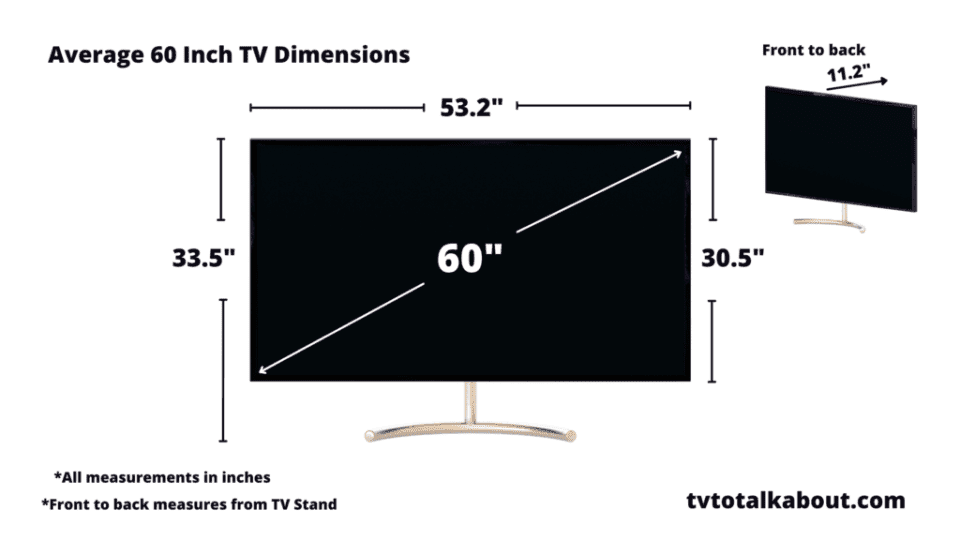
What is the Actual Size of a 60-Inch TV?
When it comes to TVs, the size is measured diagonally from corner to corner. So, a 60-inch TV would measure 60 inches from one corner to the opposite corner. However, that’s not the only measurement you need to take into account.
The width and height of the TV also need to be considered, as that will impact how much space the TV takes up overall. To give you an idea, a 60-inch TV typically has a width of about 52 inches and a height of about 30 inches. So, when placed in a room, it will occupy quite a bit of space.
If you’re tight on square footage, then opting for a smaller size might be a better option. Keep in mind that these measurements are just averages and can vary depending on the manufacturer or model. So, it’s always best to check the specific dimensions before making your purchase.
What Size of TV is Too Big for a Room?
It really depends on the size of your room and how far away from the TV you plan to sit. A general rule of thumb is that the TV should be about 1/3 the width of your couch. So, if you have a couch that is 6 feet wide, then your TV should be about 2 feet wide.
Of course, this is just a guideline and you may want a bigger or smaller TV depending on your preferences.
Are 37 Inch TVs Still Available?
Yes, 37-inch TVs are still available, but they’re becoming increasingly rare. Most TV manufacturers have shifted focus to more popular sizes like 32″, 40″, and 43″, which better fit current market demand and standard resolutions. While 37-inch models may still be found through select brands, refurbished sellers, or older stock, they are not widely produced anymore. If you need that specific size, you may have to search online marketplaces or consider nearby alternatives like 36″ or 40″.
How Far Should You Sit from a 60-Inch TV?
For optimal viewing, it’s recommended to sit around 7.5 to 10 feet from a 60-inch 4K TV. This provides an immersive experience without visible pixelation, especially if you’re watching native 4K content on streaming platforms or via Blu-ray.