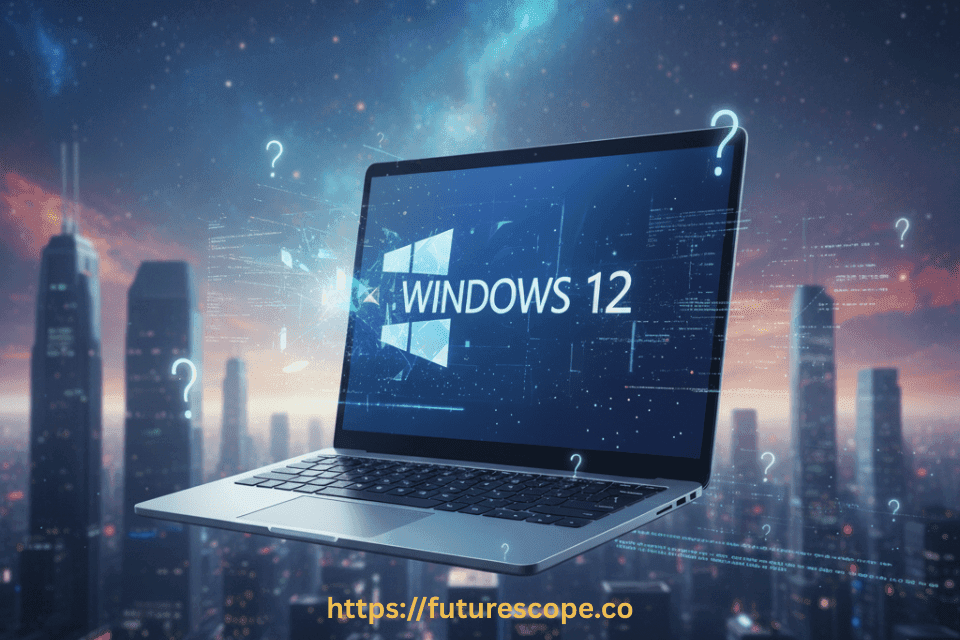

For months, rumors swirled about the release of Windows 12. Tech forums buzzed with speculation. Leaked screenshots and concept videos added fuel to the fire. But now, in 2025, Microsoft has made its position clear: Windows 12 is not coming—at least not this year.
Instead, Microsoft is focusing on Windows 11, Copilot+ PCs, and a new vision for AI-powered computing. So what’s really going on? Is Windows 12 just a myth? Or is it part of a longer-term strategy?
Let’s break it down.
The Rumors: Why People Expected Windows 12
The idea of Windows 12 wasn’t random. Here’s why many believed it was coming:
- Microsoft’s release pattern: Windows 7, 8, 10, and 11 all followed a rough 3–5 year cycle.
- Insider leaks: Some early reports hinted at a new OS with advanced AI features.
- Hardware upgrades: New chipsets from Intel and AMD seemed to align with a next-gen Windows launch.
- Windows 11 limitations: Some users hoped for a more refined experience beyond Windows 11.
But despite the buzz, Microsoft has taken a different route.
Microsoft’s Official Statement: No Windows 12 in 2025
At CES 2025 and in recent press releases, Microsoft confirmed that Windows 12 is not in the pipeline for this year. Instead, the company is investing heavily in Windows 11 updates, especially the 25H2 release, which brings major improvements.
This decision reflects a shift in strategy. Microsoft is moving away from big version jumps and toward continuous updates—similar to how Apple handles macOS.
The New Focus: Windows 11 + Copilot+ PCs
Rather than launching a new OS, Microsoft is building a smarter Windows experience. The centerpiece of this strategy is Copilot+ PCs.
These are AI-enhanced computers designed to:
- Run local AI models for faster performance
- Use Copilot, Microsoft’s AI assistant, deeply integrated into Windows
- Offer features like Recall, which lets users search their PC history using natural language
- Deliver better battery life, faster boot times, and enhanced security
Microsoft believes this is the future of computing—not a new OS, but a smarter one.
What Is Windows 11 25H2?
The 25H2 update is the biggest Windows 11 release yet. It includes:
- AI-powered search and productivity tools
- Improved Copilot integration in the taskbar and apps
- Better support for ARM-based devices
- Security enhancements for enterprise users
- Performance boosts for older hardware
This update shows that Microsoft is treating Windows 11 as a long-term platform. Instead of replacing it, they’re evolving it.
Why Microsoft Isn’t Releasing Windows 12 (Yet)
Here are the key reasons:
- Stability over novelty: Windows 11 is stable and widely adopted. A new OS could fragment the user base.
- AI-first strategy: Microsoft wants to focus on integrating AI into existing systems.
- Hardware alignment: Copilot+ PCs are optimized for Windows 11, not a new OS.
- Enterprise continuity: Businesses prefer gradual updates over disruptive upgrades.
- Windows as a service: Microsoft now treats Windows like a service—updated regularly, not replaced.
This approach mirrors how Microsoft handles Office 365 and Azure—continuous improvement, not version jumps.
What About the Future? Will Windows 12 Ever Arrive?
While Windows 12 isn’t coming in 2025, it’s not ruled out forever. Microsoft may release a new version in the future, especially if:
- There’s a major shift in hardware architecture
- AI capabilities demand a new OS framework
- User experience needs a complete redesign
But for now, Windows 11 is the core platform, and it’s evolving fast.
What This Means for Users?
If you’re wondering what to do next, here’s what Microsoft’s strategy means for you:
- Stay on Windows 11: It’s the most supported and secure version.
- Upgrade to Copilot+ PCs if you want the latest AI features.
- Don’t wait for Windows 12—it’s not coming soon.
- Install the 25H2 update to get the newest tools and performance improvements.
Whether you’re a casual user or an IT professional, the message is clear: Windows 11 is here to stay.
Should You Upgrade Your PC?
If your current PC runs Windows 11 well, you’re fine. But if you want to take full advantage of Microsoft’s AI strategy, consider upgrading to a Copilot+ PC.
These devices offer:
- NPUs (Neural Processing Units) for AI tasks
- Fast SSDs and modern CPUs
- Optimized battery life and thermal performance
They’re designed for the future of Windows—not Windows 12, but smarter Windows 11.
Best Alternatives to Windows 12
To find the best alternative to Windows 12 based on your current PC specs and how you use your computer, here’s a tailored guide to help you decide:
Identify Your PC Specs
Check your system for:
- Processor: Intel/AMD, 64-bit or 32-bit, generation
- RAM: 2 GB, 4 GB, 8 GB, or more
- Storage: HDD or SSD, and available space
- Graphics: Integrated or dedicated GPU
- TPM 2.0 & Secure Boot: Required for Windows 11
You can find this info in Settings > System > About or use tools like Speccy or CPU-Z.
Match Your Usage Habits
Ask yourself:
- Do you mostly browse the web and use email?
- Do you rely on Microsoft Office or Adobe apps?
- Are you a gamer or content creator?
- Do you prefer speed and simplicity?
- Do you need strong privacy and customization?
1. Windows 11 (25H2 and Beyond)
- Why it’s the top choice: Microsoft is focusing all its innovation on Windows 11, especially with the 25H2 update and Copilot+ PC integration.
- Ideal for: Users with modern hardware, especially those with AI-ready chips and TPM 2.0.
- Key features: AI-powered Copilot assistant, Recall, enhanced security, and better performance.
2. Linux Distributions
- Popular options: Ubuntu, Linux Mint, Fedora, Zorin OS
- Ideal for: Users who want a free, secure, and customizable OS.
- Why switch: Linux is lightweight, open-source, and great for older PCs or privacy-conscious users.
- Bonus: No license fees and strong community support.
3. ChromeOS Flex
- Developed by: Google
- Ideal for: Users who rely on web apps and cloud storage.
- Why switch: ChromeOS Flex is fast, secure, and designed to revive older hardware.
- Bonus: Easy to install and maintain, with automatic updates.
4. macOS (on Apple Devices)
- Ideal for: Users ready to switch to Apple hardware.
- Why switch: macOS offers a premium experience with strong creative app support and long-term updates.
- Bonus: Seamless integration with iPhones, iPads, and other Apple services.
5. SteamOS (for Gamers)
- Developed by: Valve
- Ideal for: Gamers looking for a Windows-free experience.
- Why switch: SteamOS is optimized for gaming and supports many Windows titles via Proton.
- Bonus: Built for performance and controller-friendly navigation.
6. BSD Variants (Advanced Users)
- Examples: FreeBSD, OpenBSD
- Ideal for: Developers and system administrators.
- Why switch: These OSes offer high stability, security, and control.
- Bonus: Great for server environments and advanced networking setups.
Best Alternatives Based on Specs & Usage
| PC Specs & Usage | Best Alternative | Why It’s a Good Fit |
|---|---|---|
| 8GB+ RAM, SSD, TPM 2.0, modern CPU Office, productivity, multitasking | Windows 11 (25H2) | Officially supported, AI-powered Copilot, secure and familiar |
| 4–8GB RAM, older CPU, no TPM Web browsing, streaming, email | ChromeOS Flex | Lightweight, fast, secure, and ideal for cloud-based tasks |
| 2–4GB RAM, very old CPU Basic use, file storage, offline apps | Linux Lite / Lubuntu / Xubuntu | Runs well on low-end hardware, free, and secure |
| 8GB+ RAM, SSD, mid-range GPU Gaming | Windows 11 or SteamOS | Windows 11 supports most games; SteamOS is optimized for gaming |
| 4GB+ RAM, SSD Coding, privacy, customization | Linux Mint / Ubuntu / Fedora | Great for developers, open-source, highly customizable |
| Incompatible PC Want to revive old hardware | Zorin OS Lite / ChromeOS Flex | Designed to breathe new life into aging PCs |
| Apple ecosystem user Creative work, design, video editing | macOS (on Apple devices) | Seamless integration, excellent creative tools, long-term support |
Example Scenarios
- You have 8GB RAM, SSD, and use Office + Zoom → Go with Windows 11
- You have 4GB RAM, use Gmail and YouTube → Try ChromeOS Flex
- You have 2GB RAM and just need a basic PC → Use Lubuntu or Linux Lite
- You’re a developer or privacy-focused user → Choose Ubuntu or Fedora
- You’re a gamer with a decent GPU → Stick with Windows 11 or explore SteamOS
Final Thoughts: Myth or Strategy?
So, is Windows 12 a myth? Not exactly. It’s more of a future possibility, not a current plan. Microsoft’s strategy in 2025 is clear: enhance Windows 11, integrate AI, and support Copilot+ PCs.
This marks a shift from version-based upgrades to experience-based evolution. It’s not about what number comes next—it’s about what your PC can do.
Frequently Asked Questions (FAQ)
1. Is Windows 12 coming in 2025?
No, Microsoft has confirmed that Windows 12 is not launching in 2025. The company is focusing on enhancing Windows 11 and integrating AI features through Copilot+ PCs.
2. What is Microsoft’s strategy instead of Windows 12?
Microsoft is shifting toward continuous updates for Windows 11, emphasizing AI-powered tools like Copilot, Recall, and support for Copilot+ PCs.
3. What are Copilot+ PCs?
Copilot+ PCs are AI-enhanced computers designed to run local AI models, improve productivity, and offer features like Recall and natural language search.
4. Will Windows 12 come in the future?
Possibly. Microsoft hasn’t ruled it out entirely, but there are no official plans for a release in 2025.
5. Should I upgrade to Windows 11 now?
Yes. Windows 11 is the most secure and supported version of Windows, especially with the 25H2 update and Copilot integration.
6. What are the best alternatives to Windows 12?
Depending on your needs, alternatives include Windows 11, Linux distributions (Ubuntu, Mint), ChromeOS Flex, macOS (on Apple devices), and SteamOS for gamers.