

Every time you open a browser and type a web address, something remarkable happens in the background. Your device asks a global system — the Domain Name System, or DNS — to translate that human-friendly name into a numeric IP address. It takes milliseconds. You never think about it.
That invisibility is exactly what makes DNS such an attractive target for attackers.
In 2023 alone, 90% of organizations experienced a DNS attack of some kind, according to the Global DNS Threat Report by IDC. These weren’t minor incidents. Many led to application downtime, data theft, and brand damage that took months to recover from.
So what’s the solution? A lot of it comes down to DNSSEC for Internet Security — a cryptographic framework that brings authentication and integrity to a system that was built without either. In this post, I’m going to break down why DNS security is critical for every internet user, what DNSSEC actually does, and why it matters more than ever.
DNS: The Internet’s Unsung Hero (And Its Biggest Weakness)
The Domain Name System is often called the internet’s phone book. That analogy is almost too generous — it’s more like the foundational directory that every single online interaction depends on.
When you visit your bank, check your email, or stream a video, DNS is running the translation layer underneath it all. It’s decentralized, fast, and built to scale. But there’s a serious catch.
DNS was designed in 1983. Security wasn’t part of the brief. The original protocol sends responses in plain UDP packets — no encryption, no verification, no way to confirm that the answer you receive actually came from a legitimate source.
For decades, this worked fine because the internet was small and mostly trusted. Today? The internet serves over 5 billion users. The threat landscape is completely different — and DNS is one of the most exploited attack surfaces in existence.
Key Stat: According to Cisco's 2023 DNS Security Report, DNS is used in over 91% of malware attacks as a core communication channel — whether for C2 callbacks, data exfiltration, or redirecting victims to malicious infrastructure.
Why DNS Security Is Crucial for Every Internet User?
Here’s something most people don’t realize: DNS attacks don’t just affect big corporations. They affect you personally. Every time you connect to the internet — from your phone, laptop, or smart TV — you’re trusting DNS to point you in the right direction.
When that trust is violated, here’s what can happen:
- You type your bank’s URL and get sent to a fake login page that steals your credentials.
- Your email server gets redirected, and attackers intercept sensitive communications before they ever reach you.
- A business’s website gets hijacked, serving malware to every visitor without the company’s knowledge.
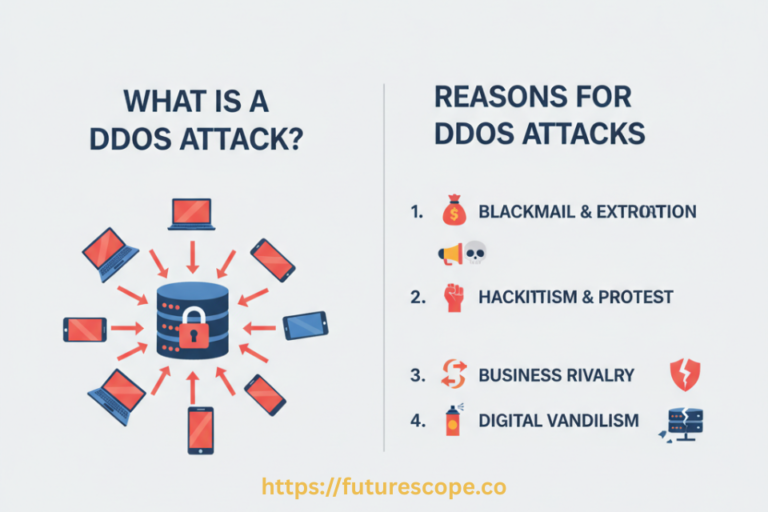
- DNS-based DDoS attacks overwhelm critical infrastructure, taking down hospitals, financial systems, or government services.
These aren’t hypothetical scenarios. The 2016 Dyn DDoS attack — which leveraged the Mirai botnet to flood DNS infrastructure — knocked Twitter, Netflix, Reddit, and dozens of other major sites completely offline for hours. It highlighted just how fragile our reliance on DNS can be.
The 2019 Sea Turtle campaign, linked to a nation-state actor, used DNS hijacking to intercept government and military communications across the Middle East and North Africa. Targets had no idea their DNS was being manipulated.
DNS security isn’t just an IT concern — it’s a fundamental part of digital safety for individuals, businesses, and governments alike.
What Is DNSSEC and How Does It Work?
DNSSEC — Domain Name System Security Extensions — is a suite of specifications that adds a layer of cryptographic authentication to DNS. It doesn’t replace DNS. It extends it with digital signatures that prove a response is legitimate and hasn’t been tampered with.
Think of it like a tamper-evident seal on a package. You can’t stop someone from looking at the box, but if the seal is broken or missing, you know something is wrong and you don’t accept the delivery.
Here’s how DNSSEC protects the DNS lookup process:
Digital Signatures (RRSIG Records)
Every DNS record set in a DNSSEC-signed zone is accompanied by a cryptographic signature. When a resolver receives a DNS response, it checks that signature against the zone’s public key. Any tampering — even changing a single byte — breaks the signature and the response is rejected.
Chain of Trust
DNSSEC builds a verifiable trust chain from the root zone all the way down to individual domains. Each level of the DNS hierarchy signs the next, creating an unbroken cryptographic path: Root → .com → yourdomain.com. If any link in that chain fails verification, resolution stops.
Authenticated Denial of Existence
Attackers can’t just fake a “this domain doesn’t exist” response either. DNSSEC uses NSEC and NSEC3 records to cryptographically prove that a record is absent — closing off another common spoofing vector.
Why DNSSEC for Internet Security Matters Right Now!
DNSSEC isn’t a new concept — it’s been in development since the 1990s. So why are we still talking about it in 2025? Because adoption has been painfully slow, and the gap between signed zones and validating resolvers remains alarmingly wide.
Here’s why the urgency has never been higher:
- AI-powered attacks: Threat actors are now using machine learning to automate and accelerate DNS exploitation, making brute-force TXID guessing and cache poisoning faster than ever.
- Critical infrastructure risk: Power grids, water systems, financial networks, and healthcare systems all depend on DNS. A well-timed DNS attack on these sectors could be catastrophic.
- Zero-trust architecture adoption: As organizations move toward zero-trust security models, DNS integrity becomes a foundational requirement — not an optional add-on.
- Nation-state threats: State-sponsored actors have repeatedly demonstrated the ability and willingness to weaponize DNS as part of cyberwarfare campaigns.
- IoT explosion: Billions of IoT devices rely on DNS with minimal security controls. Unprotected DNS resolution is a systemic vulnerability in every smart home and industrial network.
Government Mandate: The U.S. government required DNSSEC deployment across all .gov domains by 2009, and CISA continues to list it as a critical DNS security control in its cybersecurity guidelines. The EU's NIS2 directive similarly calls for DNS security hardening across member states.
The Real-World Impact of DNSSEC Adoption
Let’s look at what DNSSEC actually changes in practice — for users, businesses, and the broader internet ecosystem.
For individual users, DNSSEC-validating resolvers mean that when you type a URL, the response you get has been cryptographically verified. You’re going where you intended to go. Phishing via DNS manipulation becomes dramatically harder.
For businesses, DNSSEC protects brand integrity. Your customers can trust that your domain isn’t being weaponized against them. It also reduces liability exposure in the event of a DNS-based attack, since you’ve taken verifiable security precautions.
For the internet as a whole, widespread DNSSEC adoption raises the baseline security of every online interaction. It’s a force multiplier — when more resolvers validate and more zones are signed, the entire ecosystem becomes more resilient.
Countries with strong DNSSEC adoption have measurably lower rates of DNS-based fraud. The Netherlands, Scandinavia, and the Czech Republic consistently rank among the highest for DNSSEC deployment — and it shows in their cybersecurity resilience metrics.
What DNSSEC Doesn’t Do (Honest Truth)
I’d be doing you a disservice if I oversold DNSSEC. Here’s what it doesn’t protect you from:
- Eavesdropping: DNSSEC doesn’t encrypt DNS traffic. Your ISP or network provider can still see every domain you query. For privacy, you need DNS-over-HTTPS (DoH) or DNS-over-TLS (DoT) alongside DNSSEC.
- DDoS attacks targeting DNS servers: DNSSEC authenticates data integrity but doesn’t prevent volumetric attacks from overwhelming your DNS infrastructure.
- Compromised authoritative servers: If your authoritative DNS server is fully compromised and an attacker has your private signing keys, DNSSEC can’t save you.
- Misconfiguration errors: Botched key rollovers or expired signatures can actually break DNS resolution for your domain. Careful management is essential.
The bottom line: DNSSEC is a crucial piece of the puzzle, not the complete picture. Deploy it alongside DoH/DoT, regular DNS audits, and a strong incident response plan.
How to Get Started with DNSSEC Today?
The good news: enabling DNSSEC has never been more accessible. Here’s a practical starting checklist:
- Check your current status: Visit dnsviz.net or use the command dig +dnssec yourdomain.com to see if your domain is already signed.
- Choose a DNSSEC-capable provider: Cloudflare, AWS Route 53, Google Cloud DNS, and most major registrars support DNSSEC with minimal setup.
- Enable signing: Most providers now offer one-click DNSSEC activation through their dashboard.
- Submit your DS record: Provide your Delegation Signer (DS) record to your registrar to complete the chain of trust.
- Use a validating resolver: Configure your systems to use resolvers that validate DNSSEC — Cloudflare’s 1.1.1.1, Quad9’s 9.9.9.9 and Google’s 8.8.8.8 validate by default.
- Monitor continuously: Set calendar reminders for key rollovers and use tools like Zonemaster to monitor DNSSEC health.
Frequently Asked Questions
1. Is DNSSEC the same as HTTPS?
No — they operate at completely different layers. HTTPS encrypts the connection between your browser and a web server after DNS has already resolved the domain name. DNSSEC works at the DNS layer itself, ensuring that the resolution — the translation of a domain name to an IP address — hasn’t been tampered with. Both are important and complementary. HTTPS can still be undermined if DNS has already pointed you to the wrong server before the encrypted connection is established.
2. Does my small business really need DNSSEC?
Absolutely. Small businesses are disproportionately targeted in DNS attacks precisely because attackers assume they have weaker defenses. A DNS hijack can redirect your customers to phishing pages without any warning — destroying trust you’ve spent years building. DNSSEC deployment costs very little through modern providers and can save you from reputational and financial damage that small businesses often can’t recover from.
3. Will DNSSEC slow down my website?
The performance impact of DNSSEC is negligible for end users. The additional cryptographic verification typically adds a few milliseconds at most to DNS resolution — and since DNS responses are cached, most users never experience even that delay. The security benefit far outweighs any marginal latency concern. Modern resolvers handle DNSSEC validation extremely efficiently.
4. How widespread is DNSSEC adoption globally?
Progress is happening, but it’s uneven. As of 2024, approximately 25–30% of internet users globally are served by validating resolvers — meaning their DNS lookups are actually being verified. Zone signing adoption varies significantly by country and sector. Government and financial domains tend to have higher adoption rates, while small business and personal domains lag behind. The gap between what’s possible and what’s deployed remains one of the biggest unsolved challenges in internet security.
5. Does DNSSEC protect against all types of DNS attacks?
Not all of them. DNSSEC specifically addresses data integrity — it prevents forged or tampered DNS responses from being accepted. It does not protect against DNS-based DDoS attacks, DNS tunneling used for data exfiltration, or attacks that compromise the authoritative server itself. Think of DNSSEC as a critical layer in a defense-in-depth strategy, not a standalone solution. Combine it with rate limiting, anomaly detection, DoH/DoT for query privacy, and regular DNS security audits.
Don’t Leave Your DNS Unprotected
Here’s the reality: every day without DNSSEC is a day your domain’s DNS responses can be forged, your users can be redirected to malicious sites, and your brand trust can be silently eroded — without a single alert firing.
DNSSEC for Internet Security isn’t a luxury for enterprise IT teams. It’s a baseline hygiene requirement for anyone who owns a domain and cares about the people who use it.
Your action plan — start today:
- Go to dnsviz.net right now and check your domain’s DNSSEC status.
- Contact your DNS provider and ask: “Do you support DNSSEC signing?” If they don’t, consider switching.
- Enable DNSSEC, submit your DS record to your registrar, and verify the chain of trust.
- Pair it with DoH or DoT for DNS privacy, and schedule regular DNSSEC health checks.
- Share this post with your IT team, your peers, and anyone who runs a website — awareness is the first step.
The internet is only as secure as its weakest DNS link. Make sure yours isn’t one of them.