

If you’re tracking keyword rankings, monitoring competitors, or pulling search results at scale, you already know that Google and Bing don’t make it easy. Automated queries get flagged fast, results get personalized by location, and the wrong proxy setup can quietly hand you inaccurate ranking data without you even realizing it. So it’s a fair question: is ProxyEmpire for SERP scraping actually a good choice for SEO work, or does it fall short where it counts?
This article walks through exactly what ProxyEmpire offers for SERP scraping, which proxy type actually fits SEO workflows, where it genuinely helps, and where you might want to look elsewhere. By the end, you’ll know whether it deserves a spot in your rank tracking stack.
Why SERP Scraping Needs the Right Proxy Setup?
Search engines personalize results by location, language, and device, which means the ranking you see from your home IP often isn’t what a real searcher sees somewhere else. Accurate rank tracking depends on querying from an IP that’s actually located where your target audience is, and repeating that query pattern without getting blocked.
Search engines also actively detect and throttle automated traffic, especially from datacenter IP ranges that are well documented and easy to fingerprint. That’s why most serious SEO scraping setups lean on residential proxies with solid geo-targeting instead of the cheapest datacenter IPs available.
Need Proxies for Web Scraping? Try ProxyEmpire Today!
Try ProxyEmpire for $1.97
Curious whether ProxyEmpire is worth it? Try it yourself and see how it performs for your use case.
What ProxyEmpire Offers for SERP Scraping and SEO?
ProxyEmpire runs a residential proxy network across 170-plus countries, with targeting down to the country, region, city, and ISP level, which directly addresses the location-accuracy problem that trips up a lot of rank tracking setups. Because the IPs are tied to real ISP-assigned devices rather than data centers, they carry the kind of organic footprint search engines are far less likely to flag.
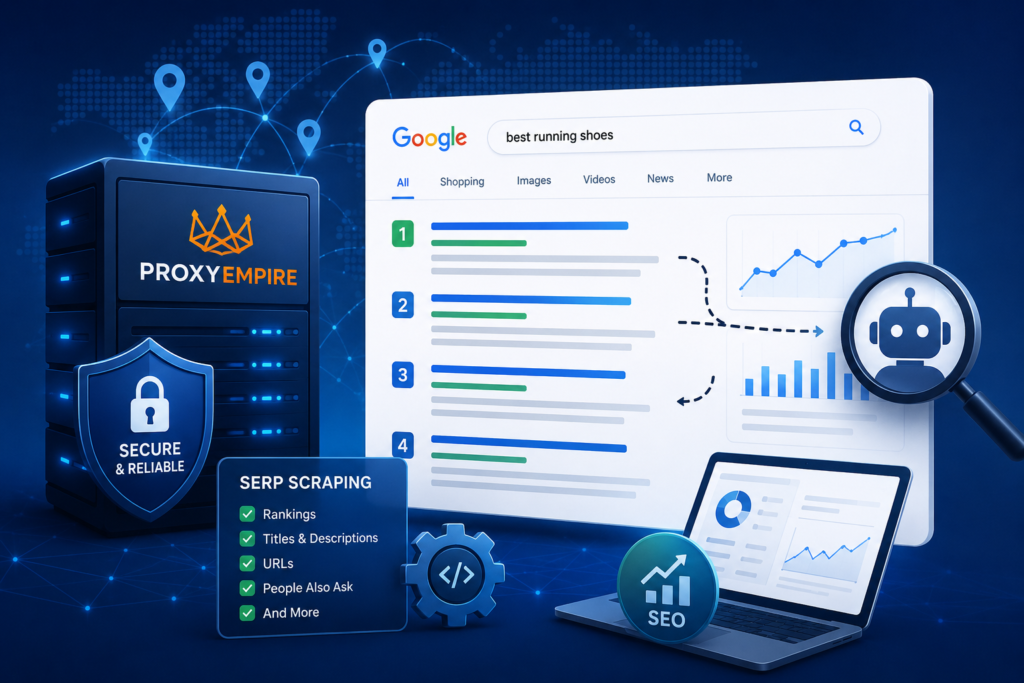
ProxyEmpire also offers a dedicated SERP scraping API alongside its raw proxy network, aimed specifically at pulling structured search result data without you having to build and maintain your own scraping and parsing layer. That combination of granular targeting and a purpose-built SEO product is exactly why the platform shows up regularly in rank-tracking proxy comparisons.
Which ProxyEmpire Proxy Type Fits SERP Scraping Best?
Not every proxy type in the lineup is equally suited to SEO work, so matching the right one to your task matters.
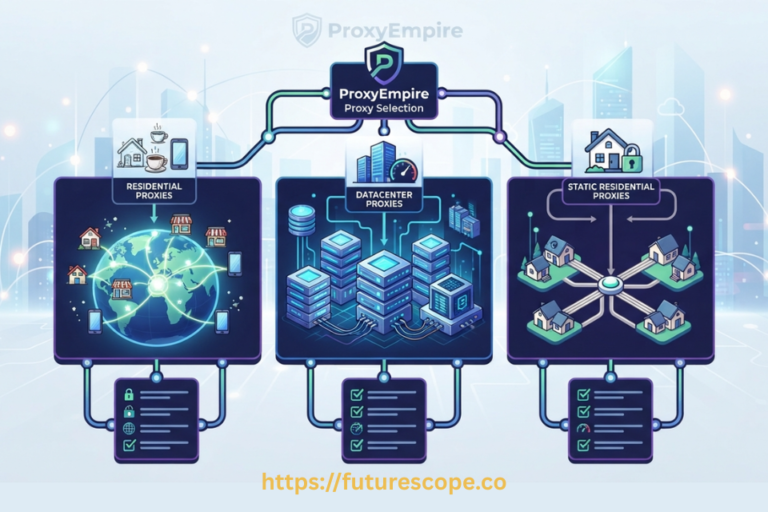
- Rotating residential proxies — The go-to choice for most rank tracking and SERP monitoring, since a large, rotating pool spreads your queries across many IPs and mimics real, distributed searchers.
- Datacenter proxies — A cost-effective option for high-volume, less location-sensitive tasks like pulling autocomplete suggestions or related search data, where search engines apply lighter bot detection.
- Static residential (ISP) proxies — Useful for tools that need to hold a consistent session across multiple related queries, rather than rotating on every single request.
- Mobile proxies — A reasonable option when you specifically need to see how results appear to mobile searchers, since search engines increasingly personalize by device type.
Features That Matter Most for SEO Workflows
A handful of ProxyEmpire’s platform features line up especially well with the practical demands of SEO scraping.
- City and ISP-level targeting — Local SEO and multi-market rank tracking depend on querying from the right city, not just the right country, and ProxyEmpire’s filters support that level of precision.
- Unlimited concurrent sessions — Tracking hundreds or thousands of keywords across multiple locations daily requires firing off many requests at once, and there’s no artificial cap holding that back.
- Bandwidth rollover — SEO query volume tends to fluctuate with campaign cycles and reporting schedules, so unused bandwidth carrying forward instead of expiring helps smooth out that unevenness.
- Session control — Tools that need to maintain a session across a multi-page SERP crawl, like pulling positions 1 through 100 for a single keyword, benefit from configurable sticky sessions.
Common SEO Use Cases ProxyEmpire Supports
- Keyword rank tracking — Automatically checking where your site and your competitors rank for target keywords across multiple search engines and regions.
- Competitor SERP monitoring — Comparing what your site ranks for against what competitors rank for, and spotting gaps in their content or keyword strategy.
- Local and international SEO — Checking rankings city by city or country by country to understand how visibility shifts across different search markets.
- SERP feature tracking — Pulling data on featured snippets, knowledge panels, and other SERP features your content does or doesn’t appear in.
- Technical SEO checks — Auditing page load behavior, redirects, and rendering as they’d appear to a real searcher in a specific location.
Start With ProxyEmpire and Scale When You Need To, Explore ProxyEmpire Proxies
Get Reliable Proxies With ProxyEmpire
If ProxyEmpire looks like a good fit, check the current plans and start with the option that suits your traffic needs.
Where ProxyEmpire Might Not Be the Best Fit?
For very high-volume, enterprise-scale rank tracking agencies pulling tens of thousands of daily queries across dozens of cities, it’s worth comparing ProxyEmpire’s residential pool size against larger, enterprise-focused providers, since some competitors advertise substantially bigger networks built specifically for that scale. Pricing also tends to sit above the cheapest budget-focused providers, so teams running only lightweight, non-localized SERP pulls might find better value with a simpler, datacenter-only setup for that narrower task.
A Quick Note on Search Engine Terms and Compliance
Scraping publicly visible search results for SEO purposes is a widely accepted, common industry practice, but it’s still worth respecting the search engine’s terms of service, staying within reasonable request rates, and sticking to publicly available data rather than anything requiring a login. Most SEO teams treat this as standard due diligence, and it’s worth a quick review of current terms if you’re planning a large-scale or commercial rank tracking operation.
Verdict: Is ProxyEmpire a Good Choice for SEO?
For most agencies, in-house SEO teams, and mid-sized rank tracking operations, yes, ProxyEmpire is a solid choice. The combination of granular geo-targeting, a dedicated SERP scraping API, unlimited concurrent sessions, and bandwidth rollover addresses the real, practical problems that come with tracking rankings accurately across multiple locations. It’s not the cheapest or the largest option on the market, but for teams that need reliable, location-accurate SERP data without managing a massive in-house scraping operation, it earns its place in the stack.
Frequently Asked Questions
1. Is ProxyEmpire good for SERP scraping specifically?
Yes. Its granular city and ISP-level targeting directly addresses the location-accuracy problem that affects rank tracking, and its dedicated SERP scraping API adds a structured option for teams that don’t want to build their own parsing layer.
2. Which ProxyEmpire proxy type works best for rank tracking?
Rotating residential proxies are generally the best fit for SERP scraping, since they distribute queries across many real, ISP-assigned IPs. Datacenter proxies can work for lighter, less location-sensitive tasks like autocomplete data.
3. Can ProxyEmpire handle local SEO rank tracking across multiple cities?
Yes, city-level targeting is one of its core features, which makes it well suited for local SEO campaigns that need to track rankings across many specific markets rather than just at the country level.
4. Is ProxyEmpire’s SERP scraping API worth using instead of raw proxies?
If you’d rather not build and maintain your own scraping and parsing infrastructure, the dedicated SERP scraping API handles that layer for you. If you already have a scraping pipeline, raw residential proxies alone may be all you need.
5. Is ProxyEmpire worth it for large-scale SEO agencies?
It can be, but very large, high-volume agencies should compare ProxyEmpire’s pool size against bigger enterprise-focused providers first, since scale requirements vary significantly between a small in-house team and a large multi-client agency.
Ready to Try ProxyEmpire for Your SEO Workflow?
You now have a clear, honest picture of whether ProxyEmpire for SERP scraping fits your SEO needs, from the proxy types that work best to the features that actually move the needle on accuracy. The best way to know for sure is to test it against your own keyword set. Start with a small residential proxy package, run it against your real target locations, and check how closely the rankings match what real searchers see. If it holds up, scale up with confidence. Go set up ProxyEmpire and start tracking your rankings today. -> -> Start Your ProxyEmpire Trial!