
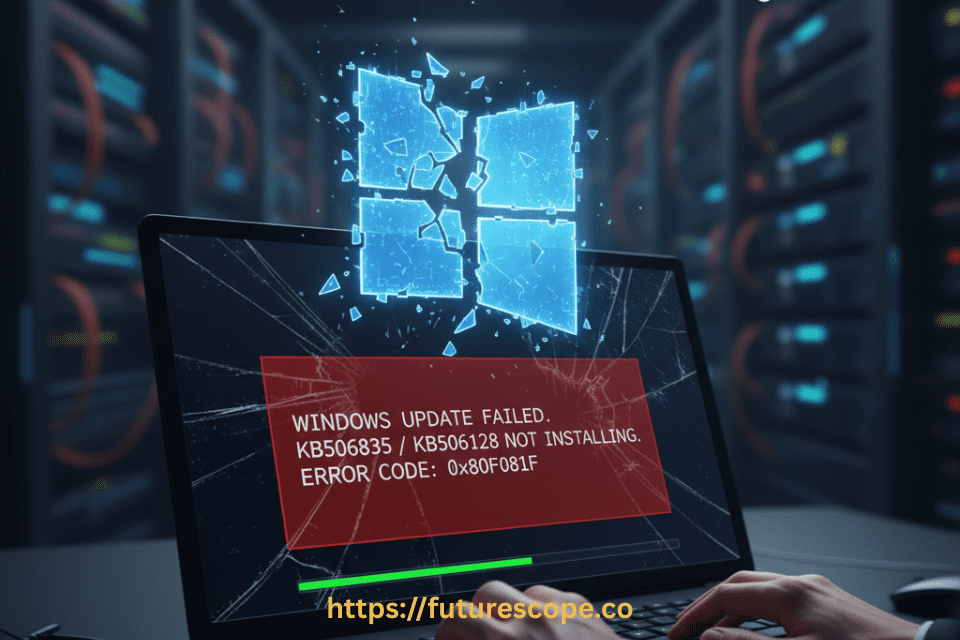

Windows updates are essential. They keep your system secure, stable, and up to date. But sometimes, updates like KB5066835 or KB5066128 refuse to install. If you’re facing this issue, you’re not alone. Many users have reported installation errors, especially error code 0x800f081f, which means missing update files.
Let’s walk through the best ways to fix this problem. This guide is simple, clear, and packed with solutions that work.
What Are KB5066835 and KB5066128?
These are cumulative updates for Windows 11. They include security patches, performance improvements, and bug fixes. Microsoft releases such updates regularly to improve your system.
- KB5066835 targets build 26200.6899 of Windows 11.
- KB5066128 is another important update for similar builds.
If these updates fail, your system might miss critical fixes. So it’s important to resolve the issue quickly.
Common Error Codes
When these updates fail, you might see:
- 0x800f081f – Missing update files.
- 0x80073701 – System file corruption.
- 0x8024a205 – Windows Update service issues.
These errors can be frustrating. But they’re fixable.
Step-by-Step Fixes of KB5066835 / KB5066128 Not Installing
Let’s go through the most effective solutions. Try them in order. One of them should work for you.
1. Run Windows Update Troubleshooter
This built-in tool can fix many update problems automatically.
- Go to Settings > System > Troubleshoot > Other troubleshooters.
- Find Windows Update and click Run.
Let it scan and fix issues. Restart your PC and try updating again.
2. Check Your Internet Connection
A slow or unstable connection can block updates.
- Use a wired connection if possible.
- Restart your router.
- Avoid downloading other files while updating.
3. Free Up Disk Space
Updates need space to download and install.
- Open Settings > System > Storage.
- Use Storage Sense to clean up junk files.
- Delete old downloads and unused apps.
Make sure you have at least 10 GB free on your C drive.
4. Use the System File Checker (SFC)
Corrupted system files can block updates.
- Open Command Prompt as Administrator.
- Type:
sfc /scannow - Press Enter.
Let it scan and fix files. This may take a few minutes.
5. Use DISM Tool
DISM repairs Windows image files.
- Open Command Prompt as Administrator.
- Type:
DISM /Online /Cleanup-Image /RestoreHealth - Press Enter.
This tool is powerful. It can fix deeper issues that SFC misses.
6. Manually Download the Update
If automatic updates fail, try manual installation.
- Visit the Microsoft Update Catalog.
- Search for KB5066835 or KB5066128.
- Download the correct version for your system.
- Double-click the file to install.
This bypasses Windows Update and often works better.
7. Reset Windows Update Components
Sometimes, the update service itself is broken.
- Open Command Prompt as Administrator.
- Run these commands one by one:
net stop wuauserv
net stop cryptSvc
net stop bits
net stop msiserver
ren C:\Windows\SoftwareDistribution SoftwareDistribution.old
ren C:\Windows\System32\catroot2 catroot2.old
net start wuauserv
net start cryptSvc
net start bits
net start msiserver
These commands reset the update system. Try updating again afterward.
8. Use Windows Update Assistant
Microsoft offers a tool to help with updates.
- Download the Windows Update Assistant from Microsoft’s website.
- Run the tool and follow instructions.
It checks your system and installs updates manually.
Advanced Fixes (If Nothing Else Works)
If you’ve tried everything and still can’t install the updates, try these advanced options.
1. Perform a Clean Boot
This starts Windows with minimal services.
- Press Windows + R, type
msconfig, and press Enter. - Go to Services, check Hide all Microsoft services, then click Disable all.
- Go to Startup tab and click Open Task Manager.
- Disable all startup items.
- Restart your PC and try updating.
This avoids software conflicts during updates.
2. Use Media Creation Tool
This tool can reinstall Windows without deleting your files.
- Download the Media Creation Tool from Microsoft.
- Choose Upgrade this PC now.
- Follow the steps to reinstall Windows.
This installs the latest version and fixes update issues.
3. Contact Microsoft Support
If nothing works, reach out to Microsoft.
- Visit support.microsoft.com.
- Use chat or phone support.
- They can guide you through advanced fixes.
How To Prevent Future Update Errors?
Once your system is updated, keep it healthy.
- Update regularly – Don’t delay updates.
- Use antivirus software – Protect against malware.
- Avoid third-party cleaners – They can delete important files.
- Backup your system – Use OneDrive or external drives.
Final Thoughts
Windows updates are vital. But errors like KB5066835 or KB5066128 not installing can be annoying. Thankfully, there are many ways to fix them. Start with simple steps like running the troubleshooter. If needed, go deeper with manual downloads or DISM.
Stay patient. Try each method. Your system will be updated soon.
If you found this guide helpful, share it with others. Let’s help everyone keep their Windows running smoothly.
Frequently Asked Questions (FAQ)
1. What is KB5066835 and KB5066128?
KB5066835 and KB5066128 are cumulative updates for Windows 11 that include security patches, performance improvements, and bug fixes.
2. Why won’t KB5066835 or KB5066128 install?
These updates may fail due to corrupted system files, insufficient disk space, unstable internet, or Windows Update service issues.
3. What does error code 0x800f081f mean?
Error 0x800f081f indicates that Windows cannot find the necessary files to complete the update. It often relates to missing or corrupted system components.
4. How can I fix Windows Update errors?
You can fix update errors by running the Windows Update Troubleshooter, using SFC and DISM tools, resetting update components, or manually installing the update from the Microsoft Update Catalog.
5. Can I install KB5066835 or KB5066128 manually?
Yes. You can download the update package from the Microsoft Update Catalog and install it manually.
6. Is it safe to skip these updates?
Skipping updates can leave your system vulnerable to security threats and bugs. It’s recommended to install all cumulative updates.
7. What if none of the fixes work?
If all else fails, try using the Windows Update Assistant or perform an in-place upgrade using the Media Creation Tool. You can also contact Microsoft Support for help.