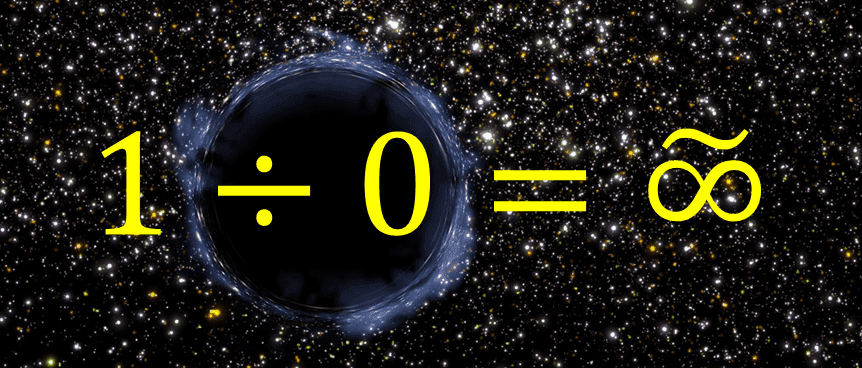
1 divided by 0 is undefined in mathematics. Dividing any number by zero does not yield a finite or meaningful result.
Mathematics, a discipline grounded in logic and precision, encounters an intriguing conundrum with the concept of division by zero. This operation, 1 divided by 0, poses a significant challenge since it disrupts the fundamental properties of arithmetic and leads to a breakdown in numerical reasoning.
Within the realm of real numbers, division typically involves partitioning a quantity into equal parts. However, zero, the symbol of nothingness, cannot serve as a divisor because it implies an attempt to distribute something into zero groups—an impossible scenario. Consequently, this mathematical operation is not supported within the standard number system and is considered undefined. By acknowledging this limitation, mathematicians maintain the consistency and integrity of arithmetic operations. Understanding this concept is crucial for students, educators, and professionals who rely on accurate calculations in fields such as engineering, physics, and finance.
The Enigma Of Division By Zero
The question of what happens when you divide 1 by 0 stirs up curiosity and confusion alike. This seemingly simple arithmetic operation hides a complex reality. Let’s unlock the mystery of division by zero and discover why it’s considered undefinable in mathematics.
Mathematical Operations And Their Boundaries
In math, operations like addition, subtraction, multiplication, and division have clear rules. These rules ensure that numbers interact in predictable ways. Yet, not all operations work under all conditions. Division by zero is one such case that pushes these boundaries.
- Addition allows any two numbers to combine into a larger sum.
- Subtraction takes away one number from another.
- Multiplication combines numbers in a more powerful way than addition.
- Division splits a number into equal parts.
Each operation has limits. For division, dividing by zero is where we draw the line. It’s a wall that mathematicians agree we cannot cross.
Zero: The Exceptional Number
Zero is unique. It represents nothingness and everything at the same time. In math, it plays a crucial role. It is the identity element for addition and the absorbing element for multiplication. Yet, when it comes to division, zero does not follow the usual rules.
| Operation | Interaction with Zero |
|---|---|
| Addition | 0 + any number equals the number itself |
| Subtraction | Any number – 0 equals the number itself |
| Multiplication | Any number x 0 equals 0 |
| Division | 1 / 0 is undefined |
Why can’t we divide by zero? Imagine sharing one cookie with zero friends. How many cookies does each friend get? You can’t share with no one! So, math says when you try to divide by zero, it doesn’t make sense. This is why calculators show an error for 1 ÷ 0.
Historical Perspectives On Division By Zero
Welcome to a journey through time as we explore the concept of division by zero from a historical lens. Understanding the development of mathematical theories provides insight into the complexities of seemingly simple operations.
Ancient Mathematicians’ Stance
In ancient times, mathematicians grappled with the idea of division by zero. Texts from these periods hint at the unease and confusion surrounding this operation. Let’s delve into their perspectives:
- Babylonians avoided division by zero in their calculations. They left problems unsolved when zero appeared as a divisor.
- Ancient Greeks like Aristotle considered division by zero a paradox. They deemed it an impossibility within their mathematical framework.
- Indian scholars, however, gave zero a numerical status, sparking debate. They struggled to define division by zero but acknowledged its existence.
Evolution Of Mathematical Concepts
Over centuries, the concept of dividing by zero evolved significantly. New mathematical branches and ideas emerged:
| Period | Development |
|---|---|
| Middle Ages | European mathematicians began discussing zero and its properties more extensively. |
| Renaissance | The symbolic representation of zero became more commonplace in mathematical texts. |
| 17th Century | Calculus introduced limits, offering a new way to approach division by zero. |
| 19th Century | Mathematicians like Cauchy and Weierstrass formalized the concept of limits and continuity. |
| Modern Times | Abstract algebra and number theory provided a clearer understanding, despite not solving the paradox. |
In conclusion, division by zero remains undefined in standard arithmetic and algebra. Yet, its historical journey reveals the dynamic nature of mathematical understanding.
Mathematical Consequences Of Dividing By Zero
When it comes to math, dividing by zero isn’t as simple as other operations. It leads to unique challenges and interesting discussions among mathematicians. Understanding what happens—or doesn’t happen—when we try to divide by zero reveals the complex nature of mathematical rules. Let’s delve into the mathematical consequences of dividing by zero.
Undefined Results In Calculus
In calculus, dividing by zero is a significant issue. It often leads to undefined results. For example, in limits and derivatives, a division by zero can cause a function to approach infinity, which is not a real number. This is why calculus uses special rules like L’Hôpital’s rule to analyze these forms.
Implications In Algebra And Analysis
In algebra, division by zero is not allowed because it does not comply with field axioms. These are rules that numbers must follow. In analysis, dividing by zero can break the continuity of a function, leading to undefined behavior in mathematical systems. It’s crucial for the consistency of math.
So, while 1 divided by 0 might seem like a harmless question, it actually has deep implications in various areas of mathematics.
Practical Implications And Philosophical Considerations
Let’s explore what happens when we divide a number by zero. This question leads to unexpected answers in both computing and physics.
Computing Dilemmas With Zero Division
Computers struggle with zero division. Here’s why:
- Errors occur. Most systems can’t handle these calculations.
- Programs may crash or freeze unexpectedly.
- Software needs rules to manage these errors.
Programmers use specific codes to avoid crashes. These include error messages or alternative computations.
Zero Division In The Realm Of Theoretical Physics
In physics, dividing by zero isn’t just a simple error. It’s a door to new theories.
- Black holes and singularities involve such math.
- It challenges our understanding of the universe.
- Physicists use advanced math to explain these oddities.
Theories like quantum mechanics arise from these problems. They show us how the universe might work on a tiny scale.
Frequently Asked Questions Divided By…
When 1 Is Divided By 0 What Is The Answer?
Dividing 1 by 0 is undefined in mathematics; it’s an operation without a valid answer.
What Is The Value Of 1 Divide By 0?
The value of 1 divided by 0 is undefined in mathematics, as division by zero is not allowed.
Why Is 1 Divided By 0 Equal To Infinity?
Mathematically, 1 divided by 0 is undefined, not infinity. Dividing by zero creates a situation without a valid numerical result, as no number multiplied by 0 gives 1.
What Is A Number Divided By 0?
A number divided by 0 is undefined in mathematics, as division by zero has no meaning or value in the number system.
Conclusion
Exploring the concept of dividing by zero reveals the limits and foundations of mathematics. This intriguing mathematical question highlights the importance of understanding theoretical concepts in practical scenarios. Remember, while the math might be complex, the curiosity it sparks is what truly expands our knowledge.
Keep questioning and exploring for deeper understanding in all areas of math and science.