
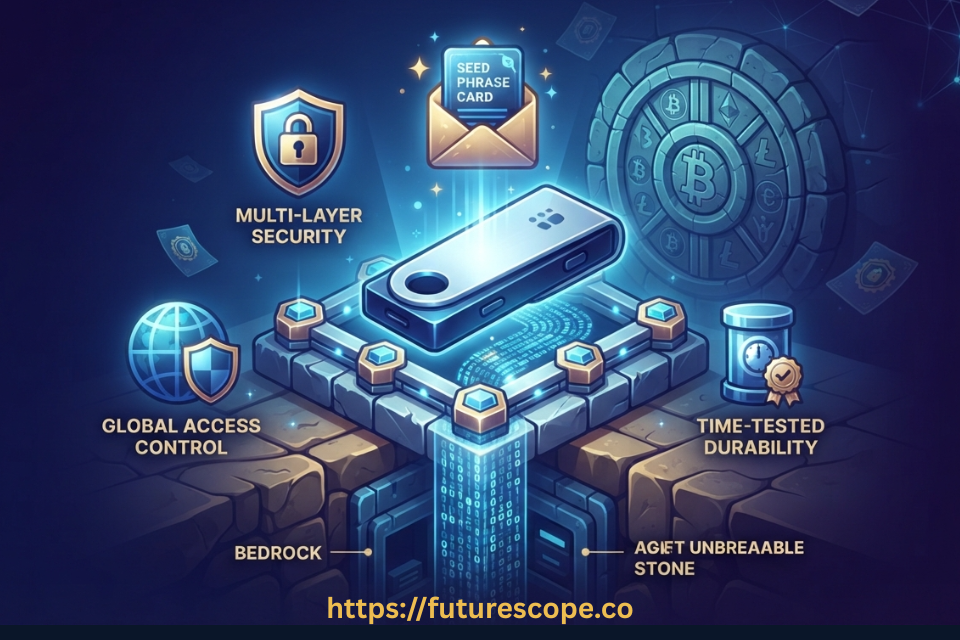

Ledger, ELLIPAL, SafePal, Tangem and More — Honestly Compared
Let me be direct with you, the way one crypto holder talks to another: if your Bitcoin or Ethereum is sitting on an exchange right now, you do not truly own it. You own an IOU. The exchange holds the private keys. And when exchanges fail — Mt. Gox, FTX, Celsius — it is the users who lose everything.
The phrase ‘not your keys, not your coins’ is not a slogan. It is a fundamental truth about how blockchain ownership actually works. Your private key is the cryptographic proof that you control an address on the network. Without it, you have nothing but hope that the platform holding it on your behalf stays solvent, secure, and honest.
For long-term storage of meaningful crypto holdings, a hardware wallet — also called a cold wallet — is the standard answer among serious holders. It stores your private keys offline, physically away from any internet connection, where hackers, malware, and phishing attacks cannot reach them.
I have tested and researched wallets for years. This guide gives you a clean, honest breakdown of the best crypto wallets for long-term storage in 2026 — with special focus on Ledger, ELLIPAL, SafePal, and Tangem, plus a few others worth knowing about.
| “The cost of a hardware wallet is negligible compared to the value it protects. A $60 cold wallet securing $5,000 in Bitcoin is the best insurance policy you will ever buy in crypto.” — Marcus Webb, Wallet Security Specialist |
Why Long-Term Cold Storage Matters: The Numbers
| $2.2B lost in crypto exchange hacks and collapses in 2023 alone | $3.96B in crypto stolen via hacks in 2025 (Chainalysis) | 5-10 yr average lifespan of a well-maintained hardware wallet | 16,000+ cryptocurrencies supported by the top wallets in 2026 |
These figures paint a sobering picture. Over the last five years, billions have been lost not because of blockchain failures, but because of custody failures — exchanges, hot wallets, and poor key management. In contrast, there are no documented cases of a hardware wallet’s cryptographic security being remotely breached. The risks with hardware wallets are physical: loss, damage, or theft of the device itself — all of which are mitigated by properly stored seed phrases.
According to the Bitcoin Foundation’s 2026 wallet analysis, the defining attributes of a trustworthy long-term storage wallet are: offline private key generation, tamper-resistant hardware, seed phrase backup, firmware verification, and active security audits. Every wallet in this guide meets those criteria.
Hot Wallets vs Cold Wallets: The Core Distinction
Understanding this distinction is foundational before choosing any wallet for long-term storage.
| HOT WALLETS (Online) Always connected to the internet Free — no hardware purchase needed Easy daily access and quick transactions Private keys stored on internet-connected device Vulnerable to hacking, phishing, and malware Best for: small amounts, frequent trading Examples: MetaMask, Coinbase Wallet, Trust Wallet | COLD WALLETS (Offline) Private keys stored fully offline Requires hardware purchase ($50-$400) Immune to online hacking and remote attacks Physical possession required for transactions Secured by EAL-certified security chips Best for: long-term holding, large amounts Examples: Ledger, ELLIPAL, SafePal, Tangem, Trezor |
The Best Crypto Wallets for Long-Term Storage in 2026
Here are the top picks, ordered from the best all-around value down to specialized options — each with an honest assessment of who they are right for.
Ledger Nano X — Best for Beginners & Versatility
Price: $149 Rating: 4.6/5
The Ledger Nano X remains one of the most popular hardware wallets in the world for good reason. It supports over 5,500 cryptocurrencies, connects via Bluetooth to both iOS and Android devices, and uses a CC EAL5+ certified Secure Element chip to store private keys. The Ledger Live app is genuinely excellent — clean, frequently updated, and able to manage staking, NFTs, and multi-account access all in one place. For anyone new to cold storage, the Nano X strikes the right balance between security and usability. The Bluetooth connectivity makes mobile management practical without compromising offline key storage — your private keys never leave the device during any transaction. One honest note: Ledger’s firmware is not fully open source, which some advanced users prefer to avoid.
[+] Pros: 5,500+ coins, Bluetooth + USB-C, Ledger Live app, stores 100 apps simultaneously
[-] Cons: Closed source firmware, expensive compared to Tangem and SafePal
Tangem Wallet — Best Overall Value (2-Card Set)
Price: $54.90 Rating: 4.7/5
CoinLedger named Tangem the best overall cold storage wallet of 2026, and it is easy to see why once you understand what makes it different. Rather than a USB device with a screen, Tangem is a credit-card-sized NFC chip that pairs with your smartphone. Your private keys are generated and stored inside the card’s EAL6+ certified chip — they never leave the card, never touch your phone, and never exist on any internet-connected device. The most radical feature: Tangem eliminates the seed phrase entirely. Instead of a 24-word recovery phrase (which can be lost, stolen, or written down incorrectly), Tangem uses a 2-card or 3-card backup system — additional physical cards that share the same key. This approach removes the single point of failure that causes most hardware wallet losses. It supports 16,000+ cryptocurrencies and is genuinely the simplest wallet to set up and use for long-term holding. \
[+] Pros: No seed phrase required, EAL6+ certified, 16,000+ coins, truly air-gapped via NFC
[-] Cons: Requires NFC-capable smartphone, firmware not open source, backup cannot be redone after setup
ELLIPAL Titan 2 — Best Fully Air-Gapped Wallet
Price: ~$139 Rating: 4.5/5
ELLIPAL takes air-gapping more seriously than almost any other wallet on the market. The Titan 2 has absolutely no USB, Bluetooth, Wi-Fi, or any wireless connectivity whatsoever. All data transfer happens via QR code scanning — you display a QR on the wallet screen, your phone scans it, signs the transaction, and displays a QR back. Nothing digital ever crosses a connected interface. This design makes the ELLIPAL Titan 2 resistant to all network-based attacks, supply chain attacks involving compromised firmware delivery, and any form of remote data extraction. The device runs on a 1400mAh rechargeable battery, features a large 4-inch color touchscreen, and supports over 10,000 cryptocurrencies. For holders who want maximum air-gap integrity and do not mind the slightly less convenient QR-based workflow, ELLIPAL is a top-tier choice.
[+] Pros: 100% air-gapped via QR code only, 10,000+ coins, large touchscreen, anti-tamper self-destruct mechanism
[-] Cons: No open source, QR workflow slightly slower than USB, requires separate phone app for all operations
ELLIPAL Titan 2 — Best Fully Air-Gapped Wallet
Price: ~$139 Rating: 4.5/5
ELLIPAL takes air-gapping more seriously than almost any other wallet on the market. The Titan 2 has absolutely no USB, Bluetooth, Wi-Fi, or any wireless connectivity whatsoever. All data transfer happens via QR code scanning — you display a QR on the wallet screen, your phone scans it, signs the transaction, and displays a QR back. Nothing digital ever crosses a connected interface. This design makes the ELLIPAL Titan 2 resistant to all network-based attacks, supply chain attacks involving compromised firmware delivery, and any form of remote data extraction. The device runs on a 1400mAh rechargeable battery, features a large 4-inch color touchscreen, and supports over 10,000 cryptocurrencies. For holders who want maximum air-gap integrity and do not mind the slightly less convenient QR-based workflow, ELLIPAL is a top-tier choice.
[+] Pros: 100% air-gapped via QR code only, 10,000+ coins, large touchscreen, anti-tamper self-destruct mechanism
[-] Cons: No open source, QR workflow slightly slower than USB, requires separate phone app for all operations
SafePal S1 Pro — Best Budget Cold Wallet
Price: ~$49.99 Rating: 4.4/5
SafePal, which receives backing from Binance, delivers remarkable security value at under $50. The S1 Pro is fully air-gapped — no USB, no Bluetooth, no WiFi — and like ELLIPAL, uses QR codes for all transaction signing. It supports an extraordinary 30,000+ cryptocurrencies and tokens, making it the most multi-chain compatible option on this list by a significant margin. The device features a 1.3-inch screen with physical directional buttons, a built-in camera for QR scanning, and an EAL5+ certified security chip. SafePal’s companion app integrates with the Binance ecosystem, enabling seamless connection to Binance DEX, BNB Chain, and a built-in swap function. For users with a diverse portfolio across many chains and a tight budget, SafePal is arguably the most versatile entry point into cold storage available in 2026. [+] Pros: 30,000+ coins, fully air-gapped QR-only, Binance-backed, built-in swap via app [-] Cons: Small screen, no open-source code, less polished interface than Ledger
Trezor Safe 3 — Best Open-Source Option
Price: $59 Rating: 4.5/5
Trezor has built its entire brand around open-source transparency, and the Safe 3 continues that tradition. Every line of firmware code is publicly auditable on GitHub — something Ledger and ELLIPAL cannot claim. The Safe 3 adds a hardware Secure Element chip (EAL6+ certified) for the first time to Trezor’s affordable line, closing a long-standing security gap. For users who believe that true security requires verified, community-auditable code, Trezor Safe 3 at $59 is the most compelling argument. It supports over 7,000 digital assets and integrates with Trezor Suite, a desktop application that also serves as a portfolio manager and basic exchange. The trade-off: no mobile app, no Bluetooth, and a design that is purely utilitarian. [+] Pros: Fully open-source firmware, EAL6+ Secure Element, supports 7,000+ coins, affordable at $59 [-] Cons: No Bluetooth or mobile app, basic interface design, plastic build feels less premium
NGRAVE Zero — Best Maximum Security
Price: $398 Rating: 4.6/5
The NGRAVE Zero is what happens when you build a hardware wallet for people who treat their crypto like a state secret. It holds the highest security certification of any consumer hardware wallet — EAL7 — meaning it has been independently verified to resist even the most sophisticated physical and software attacks. The device is fully air-gapped, uses biometric fingerprint authentication in addition to PIN entry, and can generate private keys using both its own internal true random number generator and ambient light from your environment, making key generation cryptographically unique to your specific moment of setup. The optional NGRAVE Graphene steel plates provide fireproof, waterproof, corrosion-resistant backup of your recovery phrase. For high-net-worth individuals or institutions storing significant value long-term, the NGRAVE Zero is the benchmark against which all other wallets are measured.
[+] Pros: EAL7 certified (highest available), air-gapped, biometric authentication, optional steel backup plates
[-] Cons: Expensive at $398 (plus $100 for Graphene plates), overkill for small holdings, limited niche token support
Quick Comparison: All 7 Wallets at a Glance
Use this table to compare wallets across the features that matter most for long-term storage:
| Wallet | Price | Best For | Air-Gapped | Open Source | Coins Supported | Security Cert |
| Ledger Nano X | $149 | Beginners & versatile use | No (BT) | Partial | 5,500+ | CC EAL5+ |
| Ledger Stax | $399 | Design & UX lovers | No (BT) | Partial | 5,500+ | CC EAL5+ |
| Tangem | $54.90 | Overall value + ease | Yes (NFC) | No (verified) | 16,000+ | EAL6+ |
| ELLIPAL Titan 2 | ~$139 | Air-gapped + mobile | Yes | No | 10,000+ | EAL5+ |
| SafePal S1 Pro | ~$49.99 | Budget seekers | Yes | No | 30,000+ | EAL5+ |
| Trezor Safe 3 | $59 | Open-source transparency | No | Yes | 7,000+ | EAL6+ |
| NGRAVE Zero | $398 | Max security & recovery | Yes | Partial | 3,500+ | EAL7 |
| Security Certification Guide: EAL5+ is strong consumer-grade security. EAL6+ is used in banking and government ID applications. EAL7 is the highest commercial certification available and is used in military-grade security contexts. All wallets on this list meet a minimum of EAL5+. |
What to Look for in a Long-Term Storage Wallet
Before you buy, run any wallet against this checklist:
- Air-gap status: Does the wallet have zero connectivity options, or does it use USB/Bluetooth? Fully air-gapped wallets (ELLIPAL, SafePal, NGRAVE, Tangem via NFC-only) are the gold standard.
- Security chip certification: Look for EAL5+ minimum. EAL6+ or higher is preferred for significant holdings.
- Seed phrase or alternative backup: Does the wallet use a standard BIP39 24-word seed phrase? Is it generated offline on the device? Tangem uniquely replaces this with a physical card backup system.
- Open or closed source firmware: Open source (Trezor) allows community auditing. Closed source (Ledger, ELLIPAL) requires trust in the manufacturer but can still be independently verified.
- Buy direct: Always purchase from the official manufacturer website. Counterfeit hardware wallets have been documented, and any pre-compromised device defeats all security.
- Multi-chain support: For long-term holders with diverse portfolios, ensure the wallet supports all chains you hold — not just Bitcoin and Ethereum.
Frequently Asked Questions
What happens if I lose my hardware wallet?
Your crypto is not stored on the device itself — it exists on the blockchain. The hardware wallet only stores your private keys. If you lose the device, you recover access by importing your seed phrase (24-word recovery phrase) into a new hardware wallet or compatible software wallet. This is why securely storing your seed phrase — written on paper, ideally engraved on metal, and kept in a physically secure location separate from the device — is the most important step in cold storage setup. Tangem users recover using their backup cards instead.
Can hardware wallets be hacked remotely?
No documented case of a hardware wallet being compromised remotely exists. The security model of a cold wallet makes remote hacking essentially impossible: private keys never leave the device, the device is not connected to the internet, and all transaction signing happens on the device itself with physical confirmation required. The real risks are physical: supply chain attacks (compromised devices at purchase — always buy direct), physical theft, firmware vulnerabilities discovered after purchase (why firmware updates matter), and social engineering attacks targeting your seed phrase rather than the device.
Is a hardware wallet necessary for small crypto holdings?
The general guidance: if your holdings are worth more than the cost of the wallet, a hardware wallet is worth considering. For holdings under $500, a reputable non-custodial software wallet like MetaMask or Trust Wallet with a strong password and careful phishing awareness is a reasonable trade-off. For holdings above $1,000 — and especially anything you plan to hold for years — the $50-$150 cost of a hardware wallet is genuinely minor insurance against irreversible loss. The question is not whether you can afford a hardware wallet. It is whether you can afford to lose your holdings without one.
How do I choose between Ledger, ELLIPAL, SafePal, and Tangem?
It depends on your priorities. Tangem wins on ease of use and value — ideal for most people who want simple, reliable cold storage without seed phrase anxiety. Ledger Nano X is the best choice for beginners who want the largest ecosystem support, app compatibility, and Bluetooth mobile convenience. ELLIPAL Titan 2 is for users who want the strongest air-gap guarantee and do not mind a QR-based workflow. SafePal S1 Pro is the best budget choice for multi-chain portfolios, especially for Binance and BNB Chain users. If open-source code matters to you above all else, Trezor Safe 3 is the answer.
How long do hardware wallets last?
According to CoinLedger’s cold storage analysis, well-maintained hardware wallets typically last 5 to 10 years. Physical durability varies by build quality — Ledger uses plastic and aluminum, ELLIPAL and NGRAVE use metal enclosures that are notably more robust. Tangem cards are rated for durability comparable to standard bank cards but with significantly better tamper resistance. More importantly, firmware support — security updates and compatibility with new blockchains — is what determines a wallet’s practical lifespan. Manufacturers who actively maintain firmware (Ledger, Trezor, Tangem) effectively extend the functional life of their devices indefinitely.
| Your Crypto Deserves a Fort Knox — Not a Post-it Note. Exchanges get hacked. Hot wallets get compromised. The only crypto you truly own is the crypto secured by your own keys — offline, in hardware you control. Choose your wallet today. SHOP: LEDGER.COM | ELLIPAL.COM | SAFEPAL.IO | TANGEM.COM. Always buy hardware wallets directly from official manufacturers — never from third-party marketplaces. |
Sources: CoinLedger cold storage analysis (2026), Bitcoin Foundation wallet review, Chainalysis 2025 hack report, Revolut crypto wallet guide, Travala cold wallet review, Quora community wallet discussions. Prices accurate as of June 2026.