


Yes, server CPUs are good for gaming. They offer high performance and can handle the most demanding games. Plus, they come with features that gamers need, such as support for multiple graphics cards and high-speed storage.
The answer may surprise you, but yes – server CPUs can actually be great for gaming! Here’s why:
1. They’re designed for high performance.
2. They’re built to handle heavy workloads.
3. They offer a lot of features and options for overclocking.
4. They’re usually more affordable than consumer-grade CPUs.
So, if you’re looking for a high-performance CPU for gaming, don’t overlook server processors – they could be just what you need!
Should You Game On a Server CPU?
Is a Server Good for Gaming?
A server is a great option for gaming, as it can provide a dedicated environment with low latency and high performance. However, there are some things to keep in mind when selecting a server for gaming. First, the hardware requirements of the game should be considered.
A powerful processor and graphics card are essential for gaming, and the server should have enough RAM to support them.
Second, the operating system of the server should be compatible with the game. Windows Server is a popular choice for many games, but Linux-based servers can also be used.
Finally, the networking capabilities of the server should be taken into account. A good connection is essential for online gaming, so make sure that the server has a fast and reliable network connection.
Is Xeon Better Than I7 for Gaming?
There is no simple answer to this question as it depends on a number of factors. In general, Xeon processors are designed for server and workstation applications where power efficiency and scalability are important, while i7 processors are designed for desktop PCs and laptops with a focus on performance and features. When it comes to gaming, the processor you choose will depend on what kind of games you want to play and how much money you’re willing to spend.
If you’re looking to play the latest AAA titles at the highest settings, then you’ll need a powerful processor like the Intel Core i7-8700K. However, if you’re more interested in casual or indie games, then an Intel Core i3 or Pentium processor would suffice. Similarly, if you want to game on a budget then an AMD Ryzen 3 1200 or 1300X CPU would be a good choice.
Ultimately, it boils down to personal preference and your specific needs.
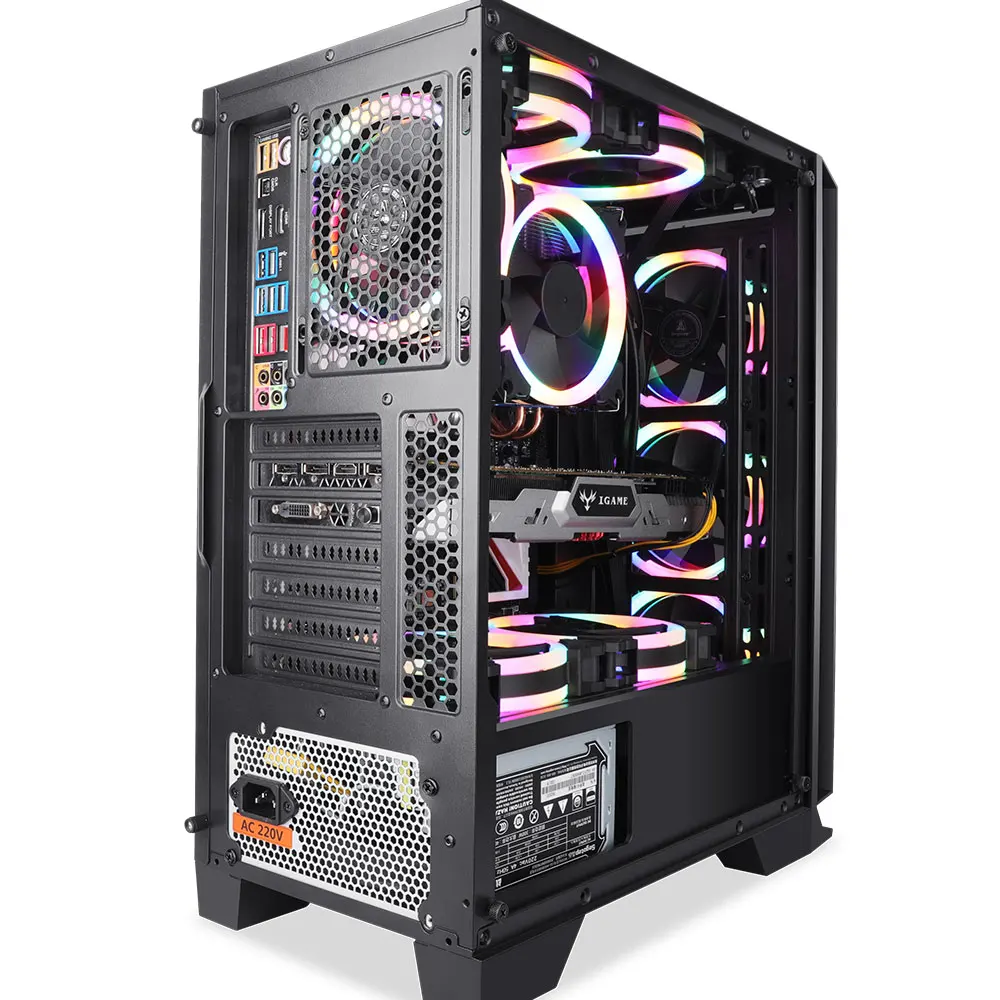
Server CPU Vs Desktop CPU Gaming
With the growing popularity of PC gaming, it’s important to understand the differences between Server CPU and Desktop CPU in order to ensure that your system can provide the best possible performance. This article will explore the various pros and cons of each option, as well as the types of games for which each might be best suited. Whether you’re building a new gaming rig or upgrading an existing one, understanding the differences between Server CPUs and Desktop CPUs is crucial in order to make the most informed decision.
Desktop CPUs are typically more powerful than server CPUs when it comes to gaming performance. This is because desktop CPUs are specifically designed with gaming in mind and have higher clock speeds, more cores and threads, and better overall performance. Server CPUs are designed for reliability and power efficiency rather than gaming performance.
One of the main differences between server CPUs and desktop CPUs is their purpose. Server CPUs are designed to run applications that require intensive processing power and scalability, while desktop CPUs are designed for gaming and other consumer-level tasks.
Another key difference is their architecture. Desktop CPUs are built with fewer cores and threads than server CPUs, which makes them more suitable for gaming. In addition, desktop CPUs are designed to run at higher clock speeds and offer higher single-threaded performance.
In order to provide the best possible performance for your gaming PC, you will need to understand the differences between a server processor and desktop processor. Here are some key factors that set these two types of CPUs apart from each other:
Power Consumption: While it’s true that both desktops and servers can be equipped with powerful processors, a server CPU uses more energy than its desktop counterpart in order to run at full capacity. This means that when it comes time to make an informed decision about which type of CPU will best suit your needs, you should consider how much power consumption your system requires. A server is more likely to consume more energy than a desktop computer does.
Cooling: One of the most important differences between desktops and servers is that servers are designed with cooling systems in order to keep them from overheating. If you want your server to run efficiently, it will need an adequate amount of cooling as well as proper ventilation. Make sure that if you choose a desktop CPU over a server CPU, then there is enough room inside your case for additional fans or liquid cooling solutions so as not to suffer from throttling issues later on down the road due to high temperatures during operation!
Price: In general terms, desktop CPUs cost less than their server counterparts because they don’t require as many advanced features like error correction code (ECC).
Input/Output Ports: The number and variety of input/output ports available on each CPU will vary depending upon what kind of hardware you have connected up to it via PCI Express slots or USB cables. If all you need is one HDMI cable then there’s really no reason to worry too much about whether your processor has multiple DVI ports or not since these types of inputs only require the use of a single connector for them all anyway. However if you’re planning on using multiple monitors then there may be more value in having multiple input/output ports available.
Hyperthreading: Another key difference between desktop processors and server CPUs is that they offer different levels of hyperthreading capabilities. This feature allows each core within a chip set to perform multiple tasks simultaneously, which increases overall system performance by as much as 20%. The downside of hyperthreading is that it can lead to higher levels of power consumption, so keep this in mind before making your final decision about which type of CPU will best suit your needs!
Gaming on a Server
If you’re a fan of online gaming, you’ve probably considered setting up a server to play with your friends. But what exactly is gaming on a server? In short, gaming on a server means hosting your own game server so that you can play online with others.
This can be done for free or for a fee, depending on the size and scope of the server. There are many benefits to setting up your own server, including having full control over who can join and what rules they must follow. Plus, it’s a great way to build a community around your favorite game.
Of course, there are also some drawbacks to setting up a server. For one, it requires some technical knowledge and effort to get started. Additionally, you’ll need to pay for any necessary hardware and software upfront.
Finally, unless you have a large number of friends interested in playing on your server, you may find yourself playing mostly by yourself. Still, if you’re serious about online gaming, hosting your own game server is definitely worth considering. It’s an excellent way to get more out of your favorite games and meet like-minded people from all over the world.
Server Gaming PC Build
A server gaming pc build is a great way to get into the world of online gaming. By building your own server, you can be sure that you have the most powerful machine possible for running your favorite games. Plus, by having your own server, you can avoid any problems that come with connecting to someone else’s server.
Here are the parts you’ll need to build your own server gaming pc: -A powerful processor. You’ll need a processor that can handle all of the game data that will be coming through it.
A good choice for a processor is an Intel Core i7 or an AMD FX 8350. -Lots of RAM. Again, because you’ll be handling a lot of data, you’ll need plenty of RAM to keep things running smoothly.
8GB of RAM should be enough for most games. -A solid state drive (SSD). An SSD will help improve load times and make sure that there are no hitches while playing games.
A 250GB SSD should be enough space for most games. -A good graphics card. You’ll need a graphics card that can render all of the game’s visuals at a high framerate.
A GTX 970 or an R9 390 are both good choices here.
Can You Use Server CPUs for Gaming?
No, you cannot use server CPUs for gaming. Servers are designed to handle large amounts of data and process them quickly, while gaming computers are designed to render graphics and provide a smooth gaming experience.
Are Xeon CPUs Good for Gaming?
No, Xeon CPUs are not good for gaming. They are designed for server applications and have high core counts and low clock speeds.
Conclusion
Are Server Cpus Good for Gaming? You may have seen server CPUs in high-end gaming PCs and wondered if they’re any good. The simple answer is yes, they can be excellent for gaming.
Server CPUs can be great for gaming and some things to keep in mind if you’re considering using one. One reason server CPUs can be great for gaming is that they often have more cores than consumer CPUs. More cores means more potential processing power, which can come in handy when playing resource-intensive games or running other demanding applications.
Additionally, server CPUs tend to have higher clock speeds than consumer CPUs, meaning they can get more work done per second. That said, clock speed isn’t everything – the number of cores is also important. Another benefit of using a server CPU for gaming is that they often come with built-in features that are helpful for gamers, such as error correction code (ECC) memory support.
ECC memory is designed to detect and correct errors, which can be important in ensuring data integrity (especially important in multiplayer games). Additionally, many server CPUs include integrated graphics processors (GPUs), which can save you money if you don’t need a separate graphics card. However, keep in mind that not all GPUs are created equal – you’ll want to make sure the integrated GPU is up to your desired level of performance before relying on it completely.
There are a few things to keep in mind if you do decide to use a server CPU for gaming. First, remember that not all games will take advantage of additional cores or higher clock speeds – so don’t expect every game to run noticeably better just because you have a beefier processor. Additionally, keep an eye on power consumption – since server CPUs tend to pack quite a bit of processing power into a relatively small package, they can end up being fairly power-hungry compared to their desktop counterparts.
Make sure your power supply has enough wattage headroom to accommodate your chosen processor (and any other high-power components like GPUs).