
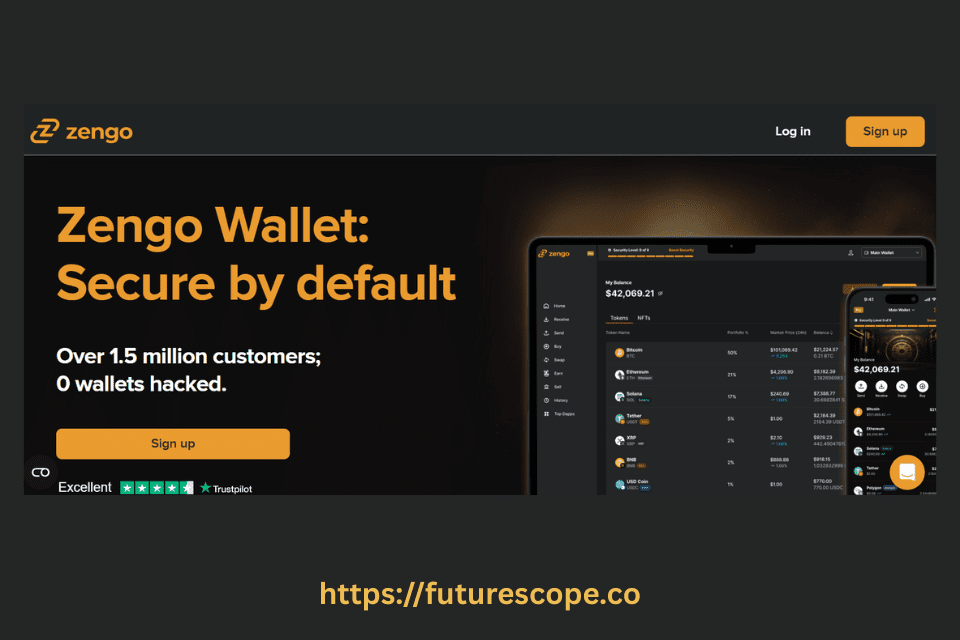

In the world of cryptocurrency, securing your digital assets is paramount, and the debate between software wallets like Zengo and traditional hardware wallets is a hot topic. While hardware wallets have long been considered the gold standard for crypto security due to their offline, air-gapped nature, Zengo’s innovative approach challenges this notion. But in recent years, a new player has shifted the conversation: Zengo. Unlike traditional cold storage options, Zengo uses MPC (Multi-Party Computation) technology to remove the vulnerabilities associated with private key management.
By leveraging cutting-edge Multi-Party Computation (MPC) cryptography and eliminating the vulnerabilities associated with seed phrases, Zengo offers a level of security and user-friendliness that often surpasses hardware wallets.
In this article, we’ll explore why Zengo is considered safer than hardware wallets, and how it reshapes the definition of crypto security in 2025.
What Makes Crypto Wallets Safe?
The safety of a crypto wallet generally depends on how well it protects your private key, which grants full control over your funds. Traditional wallets, like hardware wallets (Ledger, Trezor, etc.), store this key on a physical device, while software wallets often store it encrypted on a phone or computer. If the device is stolen or compromised, your assets could be at risk. Zengo eliminates this risk by removing the private key entirely.
Zengo’s Core Security: MPC Instead of Private Keys
Zengo uses Multi-Party Computation (MPC), a cryptographic method that splits security credentials into two separate parts: one on your device and one on Zengo’s server (secured using threshold cryptography). Both are required to approve a transaction, yet neither part alone can access your wallet. This keyless security architecture means there is no single point of failure, unlike hardware wallets where a stolen or lost device can result in total asset loss.
Why Zengo Is Safer Than a Hardware Wallet: Key Advantages
1. No Private Key = No Single Point of Failure
Traditional wallets depend entirely on safeguarding a private key. If that key is lost, stolen, or phished, you lose access forever. Zengo’s keyless MPC model ensures your wallet is always recoverable and not dependent on a physical object.
2. Biometric Recovery Instead of Seed Phrases
One of the most significant risks associated with hardware wallets is the reliance on a seed phrase—a set of 12 or 24 words that serves as the key to recovering your wallet. If this seed phrase is lost, stolen, or improperly stored, your funds are at risk of being permanently inaccessible or compromised. According to industry estimates, over $200 billion in Bitcoin has been lost or stolen due to seed phrase mismanagement over the past decade.
Zengo eliminates this single point of failure by using MPC cryptography, which splits the private key into two “secret shares”—one stored on your device and one on Zengo’s servers. Neither share alone can access your funds, making it nearly impossible for hackers to compromise your wallet, even if one share is exposed. This keyless approach ensures that you don’t need to worry about
Zengo uses biometric face scan recovery stored securely in the cloud, making it nearly impossible to lose access—even if your phone is lost or replaced.
3. Advanced Security with Multi-Party Computation (MPC)
Zengo’s use of MPC technology sets it apart from traditional hardware wallets like Ledger or Trezor. Unlike hardware wallets, which store a single private key offline, Zengo’s MPC system distributes cryptographic responsibilities across two independent shares, ensuring no single point of failure exists. This technology has been battle-tested by institutional custodians like Fireblocks and Coinbase, securing billions of dollars in assets, and Zengo is the first to bring it to consumer wallets.
Additionally, Zengo’s “Personal Share” is tied to your device’s secure hardware (Secure Enclave for iOS or Trusted Execution Environment for Android), requiring both shares to sign transactions. This makes unauthorized access exponentially more difficult, as an attacker would need to simultaneously breach both your device and Zengo’s servers—an unlikely scenario. Hardware wallets, while secure when offline, are still vulnerable to physical theft, power glitches, or user errors during setup or recovery, risks that Zengo mitigates through its decentralized key structure.
3. Built-In Risk Engine and 24/7 Security Monitoring
Zengo includes real-time threat detection, phishing protection, and wallet behavior analysis. Hardware wallets offer no such monitoring; once signed, a transaction cannot be reversed—even if it’s malicious.
4. Protected by Web3 Firewalls (Zengo ClearSign)
Interacting with decentralized applications (dApps) and Web3 platforms introduces risks like phishing or malicious smart contracts, which hardware wallets often leave unaddressed. Zengo’s ClearSign Web3 firewall is a unique feature that assesses the safety of transactions and dApp connections in real-time, offering risk alerts and ensuring you only approve secure transactions. This is particularly valuable for users navigating DeFi, NFTs, or gaming platforms, where scams are prevalent.
Most hardware wallets lack this functionality, leaving users to rely on their own judgment when signing transactions on small, often hard-to-read screens. Zengo’s intuitive interface, combined with ClearSign, provides a safer and more user-friendly experience, especially for those new to crypto.
Zengo’s ClearSign technology protects users from blind signing attacks on DeFi and NFT platforms. Unlike hardware wallets, which often prompt vague or technical signing requests, Zengo gives human-readable transaction details, helping you verify what you’re actually approving.
5. Effortless Recovery Across Devices
Lost your phone? Simply reinstall the Zengo app on a new device, complete the 3-factor authentication, and regain access. With hardware wallets, recovery depends on whether you securely stored your seed phrase—if not, your funds are lost permanently.
6. Theft Protection and Legacy Features with Zengo Pro
Zengo Pro, a premium subscription, elevates security with features like Theft Protection and Legacy Transfer, which hardware wallets cannot replicate. Theft Protection requires 3D FaceLock verification for withdrawals, ensuring unauthorized transactions are blocked, even if someone gains access to your device. The Legacy Transfer feature, a first in the industry, allows you to designate a beneficiary to access your assets in case of death or prolonged absence, addressing a critical gap in traditional wallets.
Hardware wallets offer no such inheritance mechanisms, and losing access to both the device and seed phrase can result in permanent asset loss. Zengo Pro’s additional layers of protection make it a compelling choice for users prioritizing both security and long-term planning.
7. Zero Hacks and a Proven Track Record
Since its launch in 2019, Zengo has maintained an impeccable security record, with zero wallets hacked or phished, even as it serves over 1 million users worldwide. This track record, validated by independent assessments like CertiK’s 2024 review, underscores Zengo’s reliability. Hardware wallets, while generally secure, have faced vulnerabilities, such as supply chain attacks or firmware exploits, and their security hinges on the user’s ability to protect the seed phrase.
Zengo’s MPC-based architecture, open-source cryptography, and rigorous security audits provide a level of trust that rivals, and in many cases exceeds, hardware wallets.
Common Vulnerabilities of Hardware Wallets
- Phishing attacks targeting seed phrases
- Device loss, theft, or damage without backup
- Malware that intercepts signed transactions
- Human error during recovery phrase management
Although hardware wallets offer cold storage, they rely on the security of a physical object and your discipline in safeguarding it.
Zengo vs. Hardware Wallet: Feature Comparison Table
| Feature | Zengo Wallet | Hardware Wallets |
|---|---|---|
| Private Key | ❌ None (MPC-Based) | ✅ Stored on device |
| Seed Phrase Requirement | ❌ No | ✅ Yes |
| Biometric Login & Recovery | ✅ Yes | ❌ No |
| Real-Time Threat Detection | ✅ Built-in | ❌ None |
| Cross-Device Recovery | ✅ Effortless | ❌ Seed Phrase Required |
| Web3 Transaction Transparency | ✅ Human-readable (ClearSign) | ❌ Blind Signing Risks |
| New-User Friendly | ✅ Extremely Easy | ❌ Technical Setup Required |
Why Choose Zengo Over a Hardware Wallet?
Zengo redefines crypto security by eliminating the seed phrase, leveraging MPC cryptography, and integrating advanced features like biometric authentication, ClearSign, and Theft Protection. Unlike hardware wallets, which require physical storage and meticulous seed phrase management, Zengo offers a seamless, keyless experience that’s both secure and accessible. Its 3FA recovery system ensures you can regain access to your funds even if you lose your device, while features like Legacy Transfer provide peace of mind for long-term asset management.
For beginners and seasoned investors alike, Zengo combines the security of a hardware wallet with the convenience of a mobile app, making it a superior choice in 2025’s evolving crypto landscape. Ready to experience the future of crypto security? Download Zengo today and take control of your digital assets with confidence.
Final Thoughts
In 2025, security is no longer just about cold storage—it’s about resilience, recovery, and real-time protection. Zengo delivers a next-generation crypto wallet that is not only user-friendly but also fundamentally more secure by design. By eliminating private keys and replacing them with threshold MPC, biometric recovery, and active protection layers, Zengo removes the biggest points of failure seen in traditional wallets.
If you’re someone who values security without complexity, Zengo offers peace of mind without compromising control. It’s time to rethink what “safe” means in crypto—and Zengo is leading that evolution.






I had no idea that mobile wallets like Zengo could offer stronger security through MPC technology. This article opened my eyes to the vulnerabilities of physical wallets, especially if they’re lost or stolen. Great read!
So glad you found it eye-opening! MPC technology really is a game-changer when it comes to digital asset security. It’s great to see more people exploring alternatives to traditional seed phrase-based wallets. Thanks for reading and sharing your thoughts!