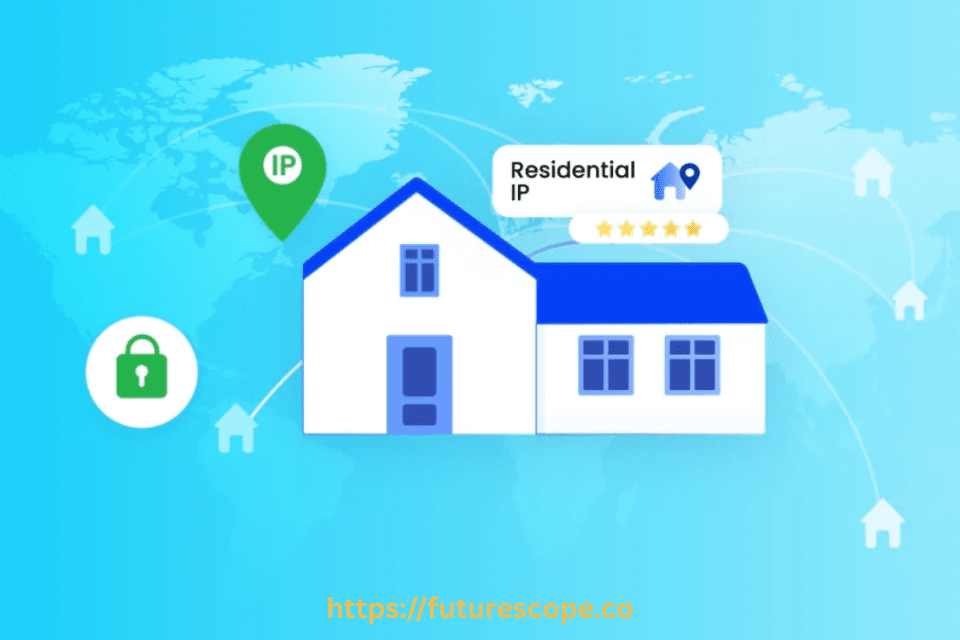

Residential proxies are IP addresses assigned by Internet Service Providers (ISPs) to real households, making them appear as genuine user connections. They’re widely used for web scraping, ad verification, market research, and bypassing geo-restrictions. Unlike datacenter proxies, residential proxies offer higher authenticity and lower detection rates, making them ideal for sensitive online tasks.
A residential proxy is an intermediary server that routes your internet traffic through real residential IP addresses provided by internet service providers (ISPs).
In simple terms, when you connect to the internet through a residential proxy, your request doesn’t appear to come from a data center or corporate network. Instead, it looks like it’s coming from a normal household device — just like any other everyday internet user.
Each residential IP address belongs to a real device (like a computer, smartphone, or router) located in a real home. This makes it much harder for websites to detect or block your activity compared to data center proxies, which often share identical IP ranges.
So, when you use a residential proxy to visit a website, the site sees a genuine ISP-assigned IP, not your actual one. This offers a perfect mix of anonymity, reliability, and accessibility.
What Is a Residential Proxy?
A residential proxy is a type of intermediary server that routes your internet traffic through an IP address assigned to a real residential device by an ISP. This means your online requests appear to originate from a legitimate home user rather than a data center or corporate server. Because websites typically trust residential IPs more than datacenter IPs, using them helps avoid blocks, CAPTCHAs, and other anti-bot defenses2.
When you connect to the internet through a residential proxy, your actual IP address is hidden. Instead, the proxy assigns you an IP from its pool of residential addresses, which could be tied to a computer, smartphone, or smart TV connected to a home Wi-Fi network. This makes your traffic look organic and trustworthy.
How Do Residential Proxies Work?
To understand how a residential proxy functions, imagine it as a middleman between your device and the internet.
Here’s what happens step by step:
- You send a request (for example, opening a web page or collecting data).
- That request first goes to the residential proxy server instead of directly reaching the website.
- The proxy then assigns a residential IP — one that belongs to a real device connected through an ISP.
- The website receives your request but sees the residential IP instead of your original one.
- The proxy then sends the website’s response back to you.
This setup allows you to browse, collect data, or perform automated tasks without revealing your true location or identity.
Because the IPs come from real ISPs, websites trust them more and are less likely to block or flag your activity.
Residential Proxies vs Data Center Proxies
To fully understand why residential proxies are so powerful, it helps to compare them with data center proxies, their most common alternative.
| Feature | Residential Proxy | Data Center Proxy |
|---|---|---|
| IP Source | Real ISP connections | Data centers or cloud servers |
| Anonymity Level | Very high | Moderate |
| Detection Risk | Very low | High (easily flagged by websites) |
| Speed | Slightly slower (due to routing) | Very fast |
| Cost | More expensive | Cheaper |
| Ideal Use Case | Web scraping, e-commerce, SEO, ad verification | Testing, low-risk automation, general browsing |
While data center proxies are faster and cheaper, they’re easier for websites to identify and block. Residential proxies, on the other hand, are much harder to detect — making them ideal for tasks that require stealth, reliability, and access to region-specific content.
Residential proxies are more expensive but offer better stealth and reliability. Datacenter proxies are faster and cheaper but more likely to be flagged by websites

Types of Residential Proxies
Residential proxies come in several forms, each suited to different tasks and levels of anonymity. Here are the main types:
1. Static Residential Proxies
These proxies assign a fixed residential IP that remains constant throughout your session. They’re ideal for tasks requiring a stable identity, such as managing social media accounts or logging into secure portals.
2. Rotating Residential Proxies
Rotating proxies automatically change your IP address at set intervals or per request. This makes them perfect for large-scale web scraping, as they reduce the risk of detection and IP bans.
3. Mobile Residential Proxies
These use IPs from mobile devices connected to cellular networks. They offer high anonymity and are especially useful for bypassing strict geo-blocks or accessing mobile-specific content.
4. Peer-to-Peer (P2P) Residential Proxies
These proxies rely on a network of real users who voluntarily share their IPs. While they offer broad coverage, they may raise ethical concerns if users are unaware their devices are being used.
Key Use Cases for Residential Proxies
Residential proxies are versatile and used across industries. Here are the most common applications:
1. Web Scraping
Businesses and researchers use residential proxies to collect data from websites without being blocked. Rotating residential IPs help bypass anti-scraping measures and ensure high success rates.
2. Ad Verification
Advertisers use residential proxies to check how their ads appear in different regions. This helps detect fraud, ensure proper placement, and verify that competitors aren’t manipulating ad delivery.
3. Market Research
Companies gather localized data on pricing, product availability, and consumer behavior using residential proxies. This enables accurate insights without triggering geo-blocks.
4. Social Media Management
Marketers managing multiple accounts use static residential proxies to avoid bans and maintain consistent identities across platforms like Instagram, Facebook, and TikTok.
5. Accessing Geo-Restricted Content
Residential proxies allow users to bypass regional restrictions on streaming services, news sites, and eCommerce platforms. By selecting an IP from a specific country, users can access content as if they were local.
6. Quality Assurance for Localized Content
Developers and QA teams use residential proxies to test how websites and apps perform in different regions. This ensures that localized versions function correctly and deliver the intended user experience.
7. SEO and SERP Tracking
SEO professionals rely on residential proxies to gather keyword rankings and search results from different countries or cities. This helps them analyze performance and plan strategies more effectively.
Benefits of Using Residential Proxies
Residential proxies offer numerous advantages, making them a top choice for businesses, marketers, and cybersecurity professionals. Let’s explore the key benefits:
1. Better Anonymity and Privacy
Because the IP addresses belong to real users, it’s almost impossible for websites to detect that you’re using a proxy. This ensures true anonymity while keeping your real IP hidden.
2. Access to Geo-Restricted Content
Residential proxies allow you to access region-locked websites and services by appearing as a user from that specific country. Whether you want to stream UK-exclusive shows or analyze local search results, proxies make it easy.
3. Fewer Bans and Blocks
Websites often block suspicious IP ranges linked to data centers. Since residential proxies use legitimate home IPs, your connections appear trustworthy, reducing the risk of bans.
4. Accurate Web Scraping
If you’re scraping data from online stores or travel websites, using residential proxies ensures accurate and uninterrupted results without triggering anti-bot systems.
5. Enhanced Online Security
Residential proxies act as a shield between your device and the internet. They mask your digital footprint and protect your personal information from tracking or hacking attempts.
6. Reliable Automation
Marketers and developers often use bots for posting, following, or data collection. Residential proxies make automation safe by ensuring each bot request comes from a real, undetectable IP.
Challenges and Drawbacks of Residential Proxies
While residential proxies are powerful, they also come with some challenges you should be aware of:
- Higher Cost: They’re more expensive than data center proxies because they use real IPs and offer superior anonymity.
- Slightly Slower Speed: Routing through real residential networks can reduce speed slightly.
- Limited Control: You can’t always choose specific IPs manually, especially in rotating setups.
- Ethical Concerns: Some providers may use unethical methods to source residential IPs, so always choose reputable proxy services.
How to Choose the Best Residential Proxy Provider?
Selecting the right proxy provider is crucial for performance and reliability. Here are key factors to consider:
- IP Pool Size – Choose providers with millions of IPs across multiple regions.
- Rotation Options – Look for flexible rotation intervals or on-demand rotation.
- Speed and Stability – Ensure the proxies offer low latency and consistent uptime.
- Pricing Plans – Pick a plan that suits your budget and bandwidth requirements.
- Customer Support – Go with providers offering 24/7 technical assistance.
- Reputation and Ethics – Ensure IPs are sourced legally with user consent.
Some trusted providers offering residential proxies include:
- Bright Data (Luminati)
- Smartproxy
- Oxylabs
- Soax
- ProxyEmpire
- NetNut.io
Final Thoughts
A residential proxy is one of the most secure and effective tools for protecting your privacy, collecting data, and accessing geo-restricted content online.
Unlike data center proxies, residential proxies use real ISP-assigned IPs, making them highly trustworthy and nearly impossible to detect. Whether you’re managing multiple social media accounts, running SEO campaigns, or scraping websites for insights, residential proxies give you the anonymity and reliability you need.
While they may cost more and have slightly slower speeds, the increased success rate and lower risk of bans make residential proxies worth the investment.
If your online activities depend on security, privacy, and smooth access to data — a residential proxy is definitely the right choice.
Frequently Asked Questions
What makes a residential proxy different from a data center proxy?
Residential proxies use real ISP-assigned IPs from home networks, while data center proxies come from servers. This makes residential proxies more authentic and less detectable.
Are residential proxies legal?
Yes, using residential proxies is legal if used for ethical purposes like data collection, SEO research, or privacy protection.
Do residential proxies slow down your internet speed?
Slightly. Since traffic is routed through residential networks, the speed can be a bit lower than data center proxies.
Can residential proxies bypass geo-blocks?
Absolutely. They can make it appear as though you’re browsing from any location, unlocking region-specific websites and services.
What is the best residential proxy provider?
Top providers include Bright Data, Smartproxy, Soax, and Oxylabs — all offering reliable IP pools and strong performance.