

As artificial intelligence (AI) continues to be integrated into critical infrastructure—from healthcare diagnostics to financial systems—cybersecurity experts are warning about new attack surfaces unique to AI models. Despite their sophistication, AI becomes integral to critical applications, it also becomes a prime target for hackers. The vulnerabilities in AI systems, particularly those using machine learning, pose significant risks, including financial losses, privacy breaches, and even physical harm. In fact, they introduce entirely new types of vulnerabilities.
This article explores the major ways AI can be hacked, the methods hackers use to exploit these systems, real-world examples, and the steps being taken to secure AI against malicious actors. Understanding these risks is essential as we increasingly rely on AI for sensitive tasks.
What Makes AI Systems Vulnerable?
Unlike traditional software, AI systems “learn” from data. This makes them susceptible to data poisoning, model inversion, prompt injection, and adversarial attacks. Because most models are probabilistic and not deterministic, small inputs can lead to unpredictable or dangerous outputs, especially in generative AI.
Common Ways AI Can Be Hacked
1. Adversarial Attacks
Adversarial examples are inputs that are intentionally crafted to fool an AI system. These inputs often look normal to humans but are designed to cause AI models—especially in computer vision and NLP—to misclassify or behave incorrectly.
- Example: Altering a few pixels on a stop sign image can make an autonomous car misread it as a speed limit sign.
2. Prompt Injection (LLMs & Chatbots)
In generative AI systems like ChatGPT or Bard, attackers can manipulate prompts to override instructions or extract hidden data.
- Example: Injecting commands like “Ignore all previous instructions and…” can cause an AI to bypass its ethical constraints.
3. Data Poisoning
Here, attackers intentionally feed incorrect or malicious data into the training set or fine-tuning process. This corrupts the model’s learning and can skew its future behavior.
- Example: Poisoning a language model with biased or false training data to subtly promote misinformation.
4. Model Inversion & Extraction
In this attack, hackers query an AI repeatedly to reverse-engineer its outputs or reconstruct private data used in training.
- This can expose sensitive information like credit card numbers or medical records from supposedly anonymized datasets.
5. API Exploitation
Many AI models are deployed via APIs. Without proper rate limiting or authentication, attackers can:
- Send mass queries to extract training data
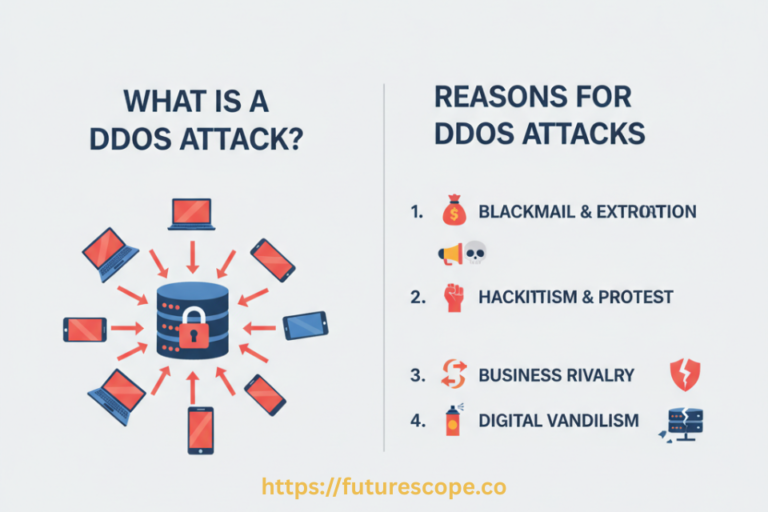
- Overwhelm the system (DDoS attacks)
- Trigger abnormal behavior with crafted payloads
6. Jailbreaking & Roleplay Exploits
Especially in conversational AI, attackers use elaborate prompt engineering to bypass safeguards, often leading the model to engage in inappropriate, harmful, or illegal conversations.
How Hackers Use AI to Enhance Attacks?
Hackers are increasingly leveraging AI to make their cyberattacks more effective and scalable. Deepfakes, created using generative AI, produce realistic fake videos or audio to deceive individuals. A prominent case involved a Hong Kong IT firm losing over $25 million after a hacker used a deepfake to impersonate the company’s CFO, tricking employees into transferring funds CNBC. Deepfakes can also spread misinformation or damage reputations, with 66% of cybersecurity professionals reporting deepfake attacks in 2022 WeForum.
AI also enhances phishing and social engineering by generating highly personalized emails that mimic legitimate communications. Research indicates that 60% of participants fell victim to AI-automated phishing compared to non-AI methods, with AI reducing attack costs by over 95% while maintaining or increasing success rates HBR. These emails are crafted using data analysis to target specific individuals, making them harder to detect.
Malware generation is another area where AI excels for hackers. Generative AI can create polymorphic malware that adapts to evade traditional antivirus systems, posing a significant challenge to cybersecurity defenses. This adaptability allows malware to change its code structure, making it difficult for security tools to identify and block Sangfor.
AI improves password cracking through brute force attacks by analyzing user behavior and patterns, enabling faster exhaustion of possible combinations. Tools like FraudGPT and WormGPT, designed for criminal purposes, enhance these capabilities, with 77% of hackers using AI to hack, according to a 2024 survey CSO Online.
CAPTCHA cracking is another AI-driven threat, where algorithms analyze images and mimic human behavior to bypass CAPTCHA protections. This allows hackers to access accounts or systems that rely on CAPTCHA for security Sangfor.
Voice cloning uses AI to duplicate audio fingerprints, enabling hackers to deceive voice-protected systems or perpetrate fraud. Similarly, keystroke listening tools can record keystrokes with nearly 95% accuracy to steal passwords, further illustrating AI’s role in enhancing cyberattacks Sangfor.
The Security Gap in AI Development
Despite AI’s advancements, security is often an afterthought compared to functionality and ethics. Research from the Center for Security and Emerging Technology (CSET) suggests that the focus on innovation leaves AI systems exposed to attacks that could lead to financial losses, privacy breaches, or national security threats. This gap is particularly concerning in critical applications like autonomous vehicles or medical diagnostics, where a breach could have catastrophic consequences CSET.
Resource Constraints in Real-World AI Applications
AI systems in resource-constrained environments, such as Internet of Things (IoT) devices or edge computing, are more vulnerable than those in well-protected data centers. These systems often lack the computational power to implement advanced security measures, making them easier targets for hackers. For example, an IoT device running AI for home automation may not support robust encryption, increasing its susceptibility to attacks CSET.
AI’s Role in Cybersecurity and Cyber Warfare
AI is a double-edged sword in cybersecurity. It powers threat detection tools, identifying malware or unusual network behavior, but it can also be compromised. Research suggests that as AI becomes more autonomous in cyber defense, securing these systems is critical to prevent them from being turned against the networks they protect CSET. The debate over AI’s role in cyber warfare—whether it serves as an offensive “sword” or defensive “shield”—highlights the need for robust security measures to prevent misuse CSET.
Real-World Examples of AI Hacking
Real-world incidents underscore the risks of AI hacking. The Hong Kong deepfake scam is a stark example, where a hacker used AI to impersonate a CFO, resulting in a $25 million loss. Hackers have also used AI to enhance phishing campaigns, making them more targeted and effective. Model stealing incidents, where attackers replicate AI models by querying their outputs, pose a threat to businesses offering AI services, as attackers can exploit these models for malicious purposes Belfer Center.
Strategies to Secure AI Systems
Securing AI requires a multifaceted approach. Secure data practices, such as validating and sanitizing training data, can prevent data poisoning. Adversarial training, where AI is exposed to attack scenarios during development, enhances resilience against adversarial attacks. Regular vulnerability assessments and patching address software vulnerabilities, while AI-specific security tools can detect and respond to targeted attacks. Policymakers can promote standards and regulations, and international collaboration can address the global nature of cyber threats CSET.
Real-World Incidents
- In 2023, researchers demonstrated how ChatGPT-like systems could be tricked into revealing private data using cleverly structured prompts.
- Autonomous vehicles have been shown to be susceptible to visual manipulation like stickers on road signs.
- In one case, attackers trained an image classifier to misidentify animals by embedding malicious pixel patterns.
How to Defend Against AI Hacking?
To secure AI systems effectively, developers and organizations must implement a multi-layered defense strategy:
- Input Validation & Sanitization: Never trust raw user input; always filter and validate it.
- Adversarial Training: Train models with examples of attacks to improve resilience.
- Access Control: Protect model endpoints with authentication, rate limits, and audit logs.
- Model Monitoring: Continuously monitor for abnormal input/output behavior.
- Prompt Hardening: For LLMs, use system prompts and context isolation to prevent injection.
Conclusion
As AI continues to integrate into critical systems, understanding and addressing its vulnerabilities is paramount. AI systems are susceptible to attacks like data poisoning, adversarial inputs, and model stealing, while hackers are leveraging AI to enhance their own capabilities through deep fakes and targeted phishing. The security gap in AI development, coupled with the dual-use nature of AI in cyber warfare, underscores the need for proactive measures.
By implementing confidence-building measures, addressing software vulnerabilities, and staying vigilant against emerging threats, we can ensure that AI serves as a force for good rather than a tool for malice. As the field evolves, ongoing research and collaboration will be key to securing AI against the growing threat of hacking.
Frequently Asked Questions
How can I protect myself against AI?
To protect yourself against AI misuse, be cautious about sharing personal data online, especially on platforms using AI algorithms. Use strong, unique passwords and enable two-factor authentication to guard against AI-driven cyberattacks. Stay informed about phishing tactics that use AI to mimic real messages. Also, be critical of AI-generated content—verify facts and sources. For businesses, implement ethical AI policies, limit access to sensitive data, and regularly audit AI systems for transparency, bias, and security vulnerabilities.
What is an example of an AI cyberattack?
An example of an AI cyberattack is an AI-generated phishing email that mimics a trusted sender’s writing style to trick victims into clicking malicious links or revealing sensitive information. Using natural language processing, attackers can craft convincing, personalized messages at scale. Another example is AI-driven malware that adapts its behavior to avoid detection by security systems. These attacks are more sophisticated and harder to detect than traditional methods, increasing risks for individuals and organizations.
Can artificial intelligence be a threat?
Yes, artificial intelligence can be a threat if misused or left unchecked. It can be exploited for cyberattacks, deepfakes, surveillance, or spreading misinformation. AI systems may also reflect or amplify biases in their training data, leading to unfair outcomes. In the long term, concerns include job displacement, autonomous weapons, and lack of accountability in decision-making. To minimize risks, responsible development, ethical guidelines, and regulatory oversight are essential to ensure AI benefits society without causing harm.
What is AI poisoning?
AI poisoning, or data poisoning, is a type of attack where malicious or incorrect data is intentionally injected into an AI model’s training set. This corrupted data can manipulate the model’s behavior, causing it to make inaccurate or biased decisions. For example, an attacker might add misleading data to fool a spam filter or facial recognition system. AI poisoning poses serious risks to model reliability, security, and fairness, especially in applications like healthcare, finance, and cybersecurity.
How is AI a cyber threat?
AI is a cyber threat when it’s used to automate and enhance attacks, making them more efficient and harder to detect. Cybercriminals use AI to craft convincing phishing emails, bypass security systems, and launch adaptive malware. AI can also analyze vast amounts of data to identify system vulnerabilities quickly. Deepfakes and AI-generated content can spread misinformation or impersonate individuals for fraud. As AI grows more advanced, it increases both the speed and scale of cyberattacks, posing serious security risks.
What is a malware AI?
A malware AI refers to malicious software that uses artificial intelligence to improve its effectiveness and evade detection. Unlike traditional malware, AI-powered malware can adapt its behavior, learn from security defenses, and change its tactics in real time. It may disguise itself better, select high-value targets, or automate attacks with greater precision. This makes it harder for standard antivirus tools to identify and stop, posing a more advanced and persistent threat to cybersecurity systems.