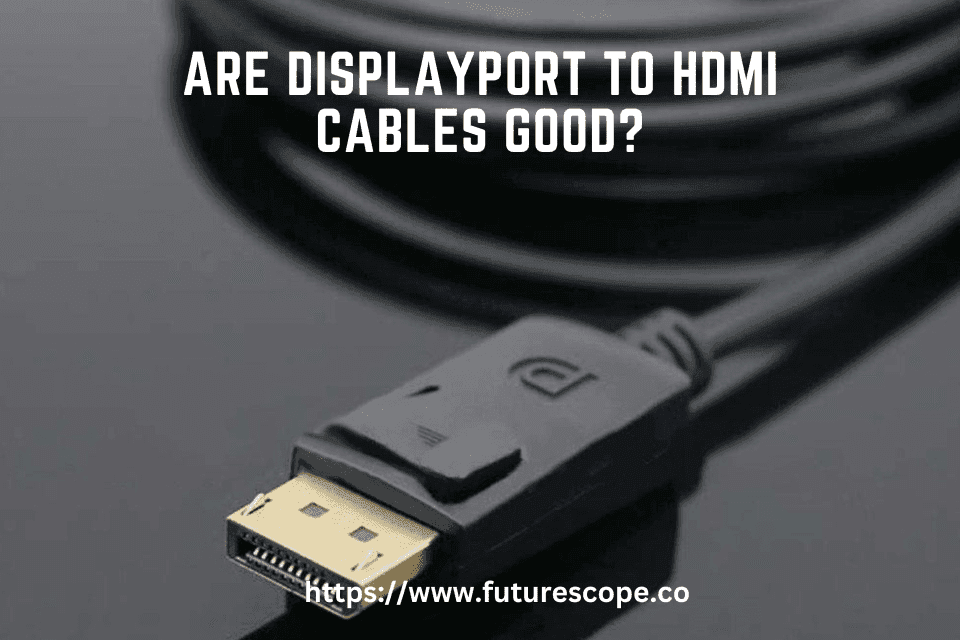

Yes, Displayport to HDMI cables are good. They allow you to connect your Displayport device to an HDMI monitor or TV. This is a great way to get the best possible image quality from your device.
If you’re wondering whether Displayport to HDMI cables are any good, the answer is a resounding yes! These cables offer a great way to connect your Displayport-equipped device to an HDMI-equipped display, and they provide excellent picture quality. Plus, they’re very affordable – you can find them for less than $20 online.
So if you need a cable to connect your Displayport device to an HDMI display, don’t hesitate to pick up a Displayport to HDMI cable.
All HDMI and DisplayPort Versions EXPLAINED
Does Displayport to HDMI Lose Quality?
When it comes to digital display connections, there are a few different options available on the market. Two of the most popular are DisplayPort and HDMI. So, which is better?
Does one option offer better quality than the other? In short, no. There is no noticeable difference in quality when using a DisplayPort to HDMI adapter.
The video and audio signals are passed through the adapter without any degradation in quality. Of course, there are some potential downsides to using an adapter like this. For one, it adds an extra connection point that could potentially introduce signal noise or interference.
Additionally, not all adapters are created equal – some may be of lower quality and not pass the signal as cleanly as others. However, as long as you use a high-quality adapter from a reputable manufacturer, you should be fine. So if you’re looking to connect your DisplayPort-equipped device to an HDMI monitor or TV, don’t worry about losing any image or sound quality – it’ll all still look and sound great!
Does Displayport to HDMI Work?
Yes, DisplayPort to HDMI cables do work. They are able to connect a DisplayPort source (like a computer) to an HDMI display (like a TV). This type of cable is commonly used when someone has a computer with a DisplayPort output but their TV only has HDMI inputs.
The cable allows the user to get audio and video from their computer onto their TV.
Is Displayport to HDMI Better Than Just HDMI?
When it comes to choosing between DisplayPort and HDMI, there are a few things to consider. Both are digital display standards that can carry audio and video signals, but there are some key differences that may make one or the other a better choice for your needs. DisplayPort is a newer standard than HDMI, and as such it offers a few advantages in terms of features and capabilities.
For example, DisplayPort 1.2 supports 4K resolution at 60Hz, while HDMI 2.0 tops out at 4K resolution at 30Hz. That means if you have a 4K monitor or TV, you’ll be able to enjoy smoother and more detailed visuals with DisplayPort. Additionally, DisplayPort can carry up to 8 channels of audio compared to HDMI’s max of 5 channels – so if you’re looking for surround sound support, DisplayPort is the way to go.
On the downside, DisplayPort cables can be more expensive than HDMI cables since they’re not as commonly used (yet). And while most modern graphics cards include a DisplayPort output, not all do – so you’ll want to check before making the switch from HDMI. Overall, whether or not DisplayPort is better than HDMI depends on your specific needs and preferences.
If you need support for high resolutions and/or surround sound audio, then DisplayPort is the clear choice. However, if cost is a concern or you don’t need those extra features, then HDMI will likely suffice just fine.
Is HDMI to Displayport Good for Gaming?
HDMI and DisplayPort are both digital display standards used to connect monitors and other displays to computers. HDMI is the most common standard found in consumer electronics, while DisplayPort is common in professional and gaming applications. Which standard is better for gaming?
That depends on a few factors. First, let’s look at resolution support. Both HDMI and DisplayPort can theoretically support resolutions up to 4K (3840×2160).
However, HDMI 2.0 is required for 4K support at 60Hz, while DisplayPort 1.2 can handle 4K at 60Hz without any issues. So if you want to game at 4K with a high framerate, you’ll need a monitor with a DisplayPort connection. Next, we’ll look at refresh rates.
Again, both standards can theoretically handle high refresh rates like 144Hz or 240Hz. However, HDMI only supports these higher rates on newer versions (HDMI 2.1), while DisplayPort 1.2 or higher has no problem handling them. So if you want a high refresh rate gaming monitor, make sure it has a DisplayPort connection rather than HDMI.
Finally, we’ll look at features supported by each standard.DisplayPort 1.3 added the ability to transmit HDR (High Dynamic Range) metadata along with the video signal, which allows compatible monitors to display HDR content correctly . This is an important feature for gamers as many new games are starting to support HDR visuals . Unfortunately , neither HDMI 2.0 nor 2.
Displayport Vs Hdmi
There are many different types of video connectors out there. Two of the most popular are DisplayPort and HDMI. So, which one is better?
DisplayPort is a newer standard that was developed by VESA (the Video Electronics Standards Association). It offers a few advantages over HDMI, including higher resolutions and refresh rates, support for multi-monitor setups, and daisy-chaining (which allows you to connect multiple displays to one another). DisplayPort also uses less power than HDMI.
HDMI, on the other hand, is more widely adopted and supported. Every TV and most computers nowadays have an HDMI port. And while it doesn’t have some of the features that DisplayPort does, it’s still a very capable standard.
Displayport Cable
If you’ve ever wondered what a DisplayPort cable is or what it does, wonder no more! A DisplayPort cable is primarily used to connect a computer to a monitor or other display device. It can also be used to carry audio and video signals.
DisplayPort is a digital interface standard that was developed by the Video Electronics Standards Association (VESA). It’s designed to replace older analog standards like VGA and DVI. DisplayPort cables are available in different lengths, with the most common being 1.8 meters (6 feet).
While you can use a DisplayPort cable with any type of monitor, it’s important to note that not all monitors have DisplayPort inputs. So, if you’re looking to buy a new monitor, make sure it has at least one DisplayPort input!
Best Displayport to Hdmi Adapter
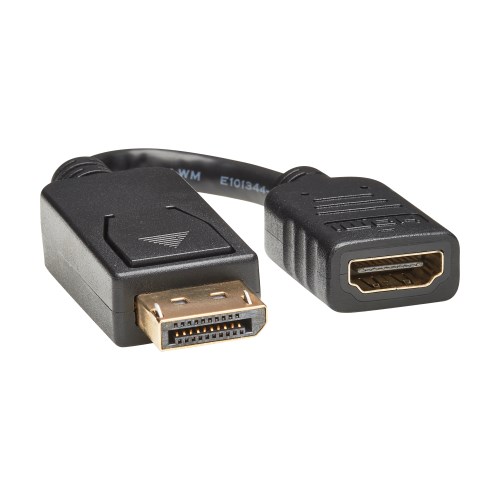
The DisplayPort to HDMI adapter is the best way to connect your DisplayPort device to an HDMI monitor or television. This active adapter converts the DisplayPort signal to HDMI, allowing you to use your DisplayPort device with an HDMI display. The adapter also supports audio, so you can enjoy both video and audio from your DisplayPort device on your HDMI display.
The DisplayPort to HDMI adapter is available in both standard and mini versions, so you can choose the right one for your needs. The standard version is compatible with all DisplayPort devices, while the mini version is only compatible with mini DisplayPort devices. Both versions of the adapter support resolutions up to 1080p and audio up to 7.1 channels.
If you have a DisplayPort device and an HDMI display, the DisplayPort to HDMI adapter is the best way to connect them and enjoy both video and audio on your display.
Conclusion
If you’re looking for a cable to connect your DisplayPort-equipped device to an HDMI-equipped display, you may be wondering if a DisplayPort to HDMI cable is a good option. The short answer is yes, these cables are generally a good option and will work well for most people. There are a few things to keep in mind, though.
First, make sure that the cable you purchase is rated for the resolution you want to use. Higher resolutions require more bandwidth, so not all cables will support 4K or 5K resolutions. Second, keep in mind that some older devices may not support the full feature set of DisplayPort 1.2 or 1.3, so check with your device manufacturer before making a purchase.